
Showing posts with label Values. Show all posts
Showing posts with label Values. Show all posts
Monday, 26 October 2020
Good dads -- the real game changer | Dr. Meg Meeker | TEDxTraverseCity
Not directly related to divorce, but certainly an indirect endorsement of keeping both parents in the lives of the kids... in praise of Dads!

Thursday, 24 October 2019
What to Do When You Feel Lost After Divorce

Divorce is tough for many reasons. Not only are we dealing with the emotions and logistics and finances, but after the dust has settled, we may feel like our life’s plans have changed direction. The life you planned and your vision of the future may disappear, leaving you with a feeling of not knowing what to do or where to go from here.
But when you feel like this, don’t panic! There is merely one thing you must remember:
You May Feel Lost Because Your Internal GPS is No Longer Working
So many of us had our entire lives invested in our marriage and our families. It was the lens with which we viewed the world. Our concept of being a spouse and a partner was our GPS. Whatever decisions we made through our marriage — whether they were personal or professional — were seen within the context of, “Well, is it good for the marriage and is it good for the family?When your marriage ends, that GPS and final destination are thrown out the window. But that doesn’t mean that you are destined to wander around in the dark.
We feel like we’re merely surviving and have not yet given ourselves the gift of dreaming again. We are so busy with dealing with the daily roller coaster of emotions and figuring out logistics and finances that we forget to do the one thing we must do.
Identifying that vision becomes our new final destination. And until we identify that vision for ourselves and then take the steps to get there, it is impossible to move forward.
You can go on auto-pilot and go through the daily motions of life, but it will be very hard to move on and reclaim the happiness you deserve unless you figure out your vision, and have a plan to get there. You must do this for yourself.
Need a little help? Here’s an exercise to start on getting rid of your roadblocks. Ask yourself the following questions.
What Do I Want?
If that question seems overwhelming, it doesn’t have to be! Some answers can be as simple as saying, “I want to be happy in my home,” or “I want to feel confident again.”What is Stopping Me from Getting What I Want?
The things that are stopping us — the obstacles to our vision — are the daily BS things that we face and frustrate us. I want you to list those. Be honest and complete, but don’t spend too much time getting caught up in the obstacles. I know for me, those obstacles included the following:What’s stopping me?
I am staying in the home although he has left, but I don’t know how to shake the feeling that he is still “here.” There are pictures of us together, some of his books are here, and I feel like everything just seems frozen in time.What’s stopping me?
I didn’t feel great when we were having marital troubles, but now that I’m alone, I feel like my self-esteem is completely gone. I feel like I don’t have any purpose and it’s awful. How do I rebuild?Once you have a few of those obstacles in mind, the fun part begins. You are going to learn how to kick those obstacles out of the way by coming up with an easy plan that erases them and gets you closer to your destination.
Start Overcoming Those Obstacles by Writing Down What You Plan to Do
You don’t need some crazy battle plan. It doesn’t need to be a PhD dissertation. All you need are some simple steps that you can start taking today. If you need some help, look at the quick plans I created for myself when I felt lost after my divorce.Life After Divorce: An Obstacles-Be-Gone Plan
I am not feeling great about myself right now. There are several things I can do to change that. If I am not already seeing a therapist, or one that I really like, I will start searching and asking for recommendations to find someone who can work through this process with me.I am also doing to do things for myself for a change. I am going to list things that I like to do – hobbies, physical activities — and will put them on a calendar so I remain accountable and committed to doing the things that I love. It’s time to put myself first.
The Road Ahead
Following this plan means you have done two awesome things for yourself. First, you now have something that sticks — something you can use to help boot out those silly roadblocks that are up in your face.And second, you now know where you want to be. You have the vision of knowing what you want. You have identified your final destination. When you know your final destination and the steps to get there, nothing can stop you.
Source: https://psychcentral.com/blog/archives/2017/05/31/what-to-do-when-you-feel-lost-after-divorce/
Friday, 17 May 2019
6 Actions You Can Take Every Day to Build Your Self-Confidence

Even the greatest leaders lack self-confidence at certain times. Self-confidence is not a static quality; rather, it’s a mindset that takes effort to maintain when the going gets rough. It must be learned, practiced and mastered just like any other skill. But once you master it, you will be changed for the better.
Here are six effective ways to promote your own self-confidence.
1. Act the part.
Your body language can instantly demonstrate self-assuredness, or it can scream insecurity. Present yourself in a way that says you are ready to master or take command of any situation. If you look confident and act the part you aspire to reach, you’ll not only feel in control, people will have much more confidence in you as well.Hold your head high, sit up straight, gently bring your shoulders back to align your spine and look directly at the other person when interacting. Avoid a limp handshake and maintain good eye contact while someone is speaking to you.
2. Dress the part.
When you look better, you feel better. If you choose clothing and accessories that fit you well, suit your industry and lifestyle, and make you feel good, this will automatically increase your self-esteem. Look like the part you want to play, or in other words, suit up for success. Don’t be afraid to let your personality shine in your accessories. Bold jewelry or a colorful tie can be a focal point and a good conversation starter.3. Speak assertively.
The next time you listen to your favorite speaker, be mindful of the way he or she delivers a speech. A great speaker speaks confidently, in a steady, rhythmic tone. Instead of the “ums” and “ahs” that interrupt flow, they use pauses to emphasize ideas.Adopt an assertive, but not aggressive, way of speaking that indicates your self-confidence. You will feel your self-esteem begin to rise. To be taken seriously, avoid high-pitched, nervous chatter or twittering giggles in your speech. People will listen to you more attentively when they see the leader radiate from within you.
4. Think and act positively.
Positive energy leads to positive outcomes, so set your mind to the can-do side of any situation, avoiding the negative self-talk that can make you feel less confident. Smile, laugh and surround yourself with happy, positive people. You’ll feel better and the people with whom you work will enjoy your company.Keep a gratitude journal to remind yourself of the high points of your day and your accomplishments. You will develop more peace and confidence when you are in a grateful state of mind.
5. Take action.
There’s more to being confident than just how you look. You must act the part. Walk up to a stranger at a networking event, or accept a project you’d normally reject. Practice being self-confident and soon it will become second nature.Inaction breeds doubt and fear, while action breeds confidence and courage. As an exercise, jot down your strengths and weaknesses. Most people will tell you to work on your weaknesses, but use what you've got and capitalize on your strengths instead. Once you put more energy into your positive traits, your confidence will start to shine through.
6. Be prepared.
Remember the five P’s: Prior planning prevents poor performance. The more prepared you are, the more confident you’ll feel about your expertise and competency. Preparation will help you avoid getting tripped up by life’s unexpected glitches.Learn everything you can about your industry, your subject matter, your goals and what drives you towards success. Before you start a task, first imagine how you want to feel once you’ve completed it. Don’t try to accomplish too much at once. Break complex tasks up into small, bite-size, manageable pieces.
As U.S. Army General Creighton Williams Abrams Jr. once said, “When eating an elephant take one bite at a time.” If you have patience and perseverance, you are only steps away from a more confident you.
Source: https://www.entrepreneur.com/article/247353
Monday, 4 December 2017
The danger of living on countdown

Most kids I know are counting down the days between to Christmas with a fervour driven from the expectation of new toys, treats and tech that they’ll receive come December 25th. It’s not just the kids either; most adults can tell you how many days of work they’ve got left before a few days of festive R&R.
It seems timely then to reflect on a tendency that many of us have year-round, living our lives counting down, marking the time between now and some point in the future when we can do what we really want; 3 hours until lunch. 4 days until the weekend. 2 weeks until our birthday. 4 months until the family vacation. 2 more years until I can leave this job for something better. You know what I’m getting at.
It’s great to have things to look forward to and anticipate but the danger of this mind-set is that we condition ourselves to another of the scourges of life; believing that now is not good enough and that things will be better at some point in the future. This is more than just a lack of mindfulness that most of us suffer, or a lack of appreciation of the power of now, of being where (and when) we are. It reflects inherent dissatisfaction that many of us have become conditioned to thinking when we consider where we are right now.
There is nothing wrong in looking forwards and I’m a big advocate of focussing on the future rather than the past. We can’t change what has gone; only learn from it and move onwards, hoping for better or indeed for more of the same. Considering our higher values, visualising what we want and guiding our actions towards their achievement are inherently part of assisting ourselves to grow, develop and achieve. If we don’t know where we want to get to, how can we possibly plan how we’ll get there? I’m certainly not advocating living a life without forethought, planning or anticipation.
The danger comes when we cease to appreciate the value of what we have now, right now, here in this moment; a danger that we live in a constant state of putting off our satisfaction to some point in the future when notionally things will be better and life will be more palatable than they are at present. I’m not advocating a life spent in the pursuit of instant-gratification, taking and doing whatever we want without consideration of the consequence. I amsuggesting mindfully appreciating what we have in this moment and seeking the enjoyment or at least appreciation of that.
I remember vividly my early days as a parent. The inherent joy was suffused with inevitable sleepless nights, worry and physical and mental challenge from being tasked with keeping our exceedingly demanding new-born alive and happy. I recall (thankfully with rose-tinted hindsight) the nights spent changing, feeding, winding and pacing around the house, attempting to soothe a crying baby; during those long nights when it seemed like everyone else in the world was enjoying a deep and restful sleep, I comforted myself that it wouldn’t be this way for long. I yearned for the day when a new-born starts to settle, and an uninterrupted 6 hours of sleep wouldn’t seem like an outrageous impossibility.
With the passing of time, the challenges of pacifying a new-born baby were replaced with other equally challenging phases; teething, toddling, the terrible twos, endless colds and bugs, and a myriad of other tests that mark the passing of the early years. In each of these periods I found myself comforted by thoughts that it wouldn’t be this way forever but with hindsight I remember most, if not all phases in the lives of my kids with fondness and wistfulness, not a sense of relief at their passing.
It seems to me that in parenting and in many other aspects of life I’ve been guilty of always looking to the future as the point at which things will be easier and more fulfilling and rewarding rather than keeping myself present in the now and enjoying every aspect of the moment. That the rewards have come and that I can look back fondly on even the most testing events of the past is fortunate for certain, but I can’t help but wonder what happiness I missed out on along the way merely because I was so fixated on what was to come.
“What lies behind us and what lies before us are tiny matters compared to what lies within us.”
-Ralph Waldo Emerson
As a child, I vividly remember counting down the days to the weekend, the number of sleeps until a family holiday and in adolescence, the number of shifts left at work until the summer break or how many semesters before graduation. In the early years of my career I was permanently fixated on the next role, the promotion that would finally endow me with the authority (and pay-check) that I desired, and the material possessions that would eventually be mine. I have been way too guilty in the past of taking my eye off the here and now in favour of considering the shinier and happier future, and it’s one of the many traits I hope not to pass on to my kids.
When the going gets tough it’s a natural tendency to remind ourselves or those around us sharing the period of challenge that things won’t always be this way, and inevitably that can be a source of comfort. Perhaps an alternative means of tackling these challenges would be to mindfully acknowledge and accept the way that things are and to consider what the lessons are we can take from what we’re currently experiencing, or even, dare I suggest it, to enjoy the feeling of taking on the challenges?
This is of course easier said than done at times. In the midst of a busy period at work or in the run up to exams or assignment deadlines at school or college it can be hard to see anything very positive about the now; rather, we focus on that point in the future when it will all be over. Perhaps though in this moment if we can elevate ourselves to see things from a slightly greater altitude, we may just take off the pressure. If we can acknowledge that we are undoubtedly in the midst of stress, challenge and even emotional, psychological or intellectual hardship, we may also be simultaneously proving to ourselves and others just how much we can handle and the circumstances within which we can thrive. Such realisations can be a great source of happiness, comfort and empowerment.
Such realisations may only dawn on us in reflection, once the time of challenge has passed and we have weathered the storm. It is this tendency that often gives us the rose-tinted hindsight that most enjoy. The lessons we can take from times of difficulty and the opportunities we have for growth in the aftermath will undoubtedly be heightened if we can not only get through them as quickly as possible, but actually be mindful of the challenges at the time and to learn and grow as we go rather than waiting until some point in the future.
It isn’t necessarily intuitive to be mindful and present as we contemplate the challenges of the now, but if we can get better at recognising quicker that we didn’t just get through challenging times, but that we thrived, grew and owned the moment then that is a huge positive step.
In mastering this skill, we can then enjoy both the big things that are forthcoming such as Christmas, but also the little things too. More joy sounds good to me!
Toby
Sunday, 3 December 2017
He’s making a list, checking it twice

I love Christmas time. It’s the most wonderful time of the year (if the song is to be believed).
Once Halloween has passed and the supermarket displays of mince pies, sherry and tinsel start to seem less-ironic and vaguely seasonal I feel justified in allowing myself to enjoy the run up to it. I get excited, I daydream and I anticipate.
I’ve been the same all my life. As a child, the countdown was marked with an advent calendar (which to the shock of my kids didn’t used to feature a nugget of chocolate behind every door, but instead a small festive picture; a robin, a sprig of holly or perhaps a scene from the nativity to mark each passing day; very low-key). Not content with the calendar I would re-read festive books and re-watch favourite Christmas TV series’ and movies; with the skills of a marketing genius I would build myself into a frothing frenzy of festive anticipation by the time Christmas day came around.
I may have matured a little to the extent that I’m able to sleep uninterrupted on Christmas Eve without listening for sleigh bells, but it hasn’t stopped me from feeling the joy of the anticipation. If anything, the sensation is heightened now. I’ve compounded it too by banning from the house all decorations, Christmas movies and music and the consumption of mince pies and mulled wine until December 1st or later. It’s not a standpoint that has won me many fans, but my motives are positive; I want to maintain a sense of perspective, to reinforce for my nearest and dearest that if we’re truly going to enjoy the end-of-year festivities and celebrate for a few days by exchanging gifts and overeating and drinking, then surely we can confine the joy and the anticipation to just one month of the year? Better to make it one good month than a tedious two?
At risk of this descending into a ‘things aren’t the same as they used to be’ piece, I wanted to get the above disclaimer in to ensure that you don’t think of me as someone who can’t feel festive delight or revel in the anticipation of something just as much (if not more than) the event itself. Scrooge, I am not.
What I’ve been reflecting on since the Christmas season arrived, is prompted in observing the annual ritual of my kids preparing their Christmas lists.
When I was a child (there’s the statement you were no doubt expecting) I recall the challenges of compiling my Christmas list of gifts I hoped to receive. Writing it down made sure there could be no misinterpretation, and thanks to my parents who seemed helpfully to have a fast-track in getting it sent to the North Pole, ensured that at least some of the items would appear beneath the tree on Christmas morning.
As a kid, I wasn’t so much focussed on the season of good cheer, but more on the opportunity to get some new toys or to push the boundaries of my material life, to request some coveted item that would bring new meaning to my life. I can’t remember a single Christmas spent feeling anything other than delighted with the gifts I received, surrounded by love and festive joy; for that reason and many others I feel blessed for my childhood and upbringing.
As my reminiscences become wistful and my hindsight more rose-tinted it strikes me just how much the very act of preparing a Christmas list has changed. As a child, with the advent of the Internet being at least 30 years away my research was confined to toy commercials on TV, items I may have spotted in a shop or occasionally from flicking through a home-shopping catalogue. There was a logistical limit around my expectations, and on what my parents (sorry, Santa) might provide me with. It was assumed that what I wanted was available from a shop somewhere in a town near me. At a stretch, it might be something available from a shop in London (in my juvenile mind, a mysterious and wonderful place where shop shelves groaned under the weight of exotic toys the likes of which I could only dream).
Today the assumption is that pretty much any product, be that a toy, article of clothing or item of technology can be obtained for the right price and within little more than a few days priority shipping from anywhere in the world thanks to the web. Therein lays the quandary for the accommodating parent who is hoping to keep their kids’ feet on the ground when it comes to composing their list. The only limit is that enforced by the parents and their budget, and I believe the kids know and believe this too even if their belief in Santa remains intact.
I recall a particularly landmark year for my eldest daughter. She’d turned 12 or 13 that year and as Christmas loomed it was clear that she knew exactly what she wanted and expected. For context, she’s a hard worker and academically astute but like most teens, prone to taking the path of least resistance when it comes to school work. Contrast this work ethic with the time that had been devoted to writing the Christmas list that was presented to me and other members of the family and it was obvious where her priorities lay.
The list itself was truly a thing of beauty, and no small miracle of desktop publishing; A single side of A4 paper, it detailed desired items (ranging as I recall from a very specific tweed jacket through to a number of high-end make-up products) with a list of retail stockists and their web addresses, current prices and even a ranking system to ensure we understood her priorities. The finished article was rolled up like a University Diploma, and tied with string in an ornate bow. She’d even gone as far as holding initial briefing calls with her grandparents, aunts and her mother to ensure they were agreed on what each was expected to buy for her.
The arrival of the list elicited mixed emotions; I’ve still got my copy in a file-box as I want to reminisce over it in years to come alongside finger-paintings and past-school reports with a sense of nostalgic amusement. There was also a sense of slight despair though when we considered how our baby could have become so materialistic and fixated on organised material gain. The spirit of Christmas had well and truly evaporated.
As with most kids these days it was apparent just how materially focussed she had become. Far from criticising her for this (for she is a product of the world she lives in and the parenting she has received from us) I now see the same traits emerging in her younger sisters and brother (now aged 13, 11 and 8).
One evening this week, child number three (the 11 year old boy) undertook 10 minutes of maths homework with begrudging-resistance, his mantra being to get the bare-minimum done in the least time required to the lowest acceptable standard. Following this, he applied himself to a diligent hour and a half on an iPad researching and then documenting his Christmas list (the third draft) and annotating and cross-referencing the already comprehensive notes prepared the previous evening. If the work ethic applied to the two tasks were reversed I’m confident that he’d be graduating from Harvard within 5 years.
I’ll confess at this point that the rest of this article in its first draft descended into a rant over the challenge of combatting materialism in kids and how Christmas plays-to and encourages this trait. The article also reflected on the year-round frustrations I feel as a parent in response to the relative efforts my kids will apply towards the tasks that they want to do in comparison to those (e.g. homework) that they have to do.
It is somewhat ironic then that it was during a bit of lunchtime Christmas shopping today, listening to the excellent audio book ‘The Values Factor” by Dr John DeMartini that an alternative angle to this topic crystallized in my mind.
Undoubtedly modern life encourages greater consumerism in our kids who are able to identify absolutely any material product that exists in the world and which they could conceivably want. They also know that with the money and a short wait it can be theirs. I believe that social media and the cult of celebrity also tend to instil the belief that anyone can have anything they want, and no substitute should be accepted. This trait is simply a reality of modern life and it is down to the individual parent to find their own balance between giving their children the things they are able to and want to whilst (hopefully) also ensuring that the kids don’t develop a sense of entitlement or a failure to appreciate the value of things in the process.
As far as my other frustration, well when did any kid ever get on and do their homework willingly and voluntarily when faced with a choice between that and something they really want to do?
The key factor is the relationship between the task at hand and, in Dr DeMartini’s words, the child’s own higher-values. The simple and obvious aspect in each of the two scenarios that I described earlier is that my kids were doing more than just reacting to an inherent desire to accumulate more and add to their armoury of material possessions. Sure, they are kids and are allowed to be excited about Christmas and the prospect of asking Santa for new things. In each example however, they were both demonstrating this desire but in a way that brought out their passion, their values, and emphasizing and honing skills that I am sure will one day become a large part of their identities, their adult lives and their work.
In the case of my daughter, she was using her passion and skill as an artist to create a list that was not only filled with facts and information to convey her wishes, but that was also visually appealing and tastefully presented. Over-engineered certainly, but pretty, nonetheless. She is now an arts student at college and I’m sure that whatever she does in adult life, she will always tend towards the visual and the aesthetic in whatever work she produces, especially when trying to convey a subject or relay content that she is passionate about.
In the case of my son, he has a keen mind for detail and an encyclopaedic knowledge on topics that fire his imagination. He may not leap with joy at the sight of a sheet of mathematics problems, but he can relay details of the 2015/16 Manchester United Football season (and the one before it) to an impressive level of detail and he can identify and recall the key skills and signature moves of hundreds of superheroes at will. In researching the content of his Christmas list to the level of detail that he did, he was demonstrating diligence and an attention to detail on topics that align to his higher values and interests that I’m sure will serve him well in life and his career. Similarly, his skills in employing modern technology to collate his list with zero assistance and supreme focus demonstrate just how seamlessly technology and its use is embedded in him and how he thinks.
As with many things I’ve learned (and continue to learn) as a parent, it’s very easy to jump to conclusions when your child does (or doesn’t do) something. Understanding the cause doesn’t always excuse the action (or effect) but at least it can help offer an alternative perspective and aid your understanding. In some instances, like the above, it can also help you recognise the positive traits and behaviours arising from the situation which are to be encouraged, not quashed. In turn, that can help you to plan future strategies so that when you are next confronted with a similar challenge you can adapt your behaviour or expectations rather than blindly hoping for something different. That is my lesson learned for today.
I have numerous memories of Christmases past, and many that are no doubt artificially vivid thanks to oft-viewed family photos. One such memory (and possibly representing my best ever Christmas present) was of a Cowboy dressing-up costume comprising a fringed trouser and waistcoat combo made by my Mum and a Leather pistol holster crafted by my Dad. At the age of about 5, the photo of me and my sister that Christmas morning (she wearing the nurses outfit with similar home-made provenance) epitomises to me the sentiment that I want to recapture for my kids in giving them memorable Christmases for years to come.
That isn’t to say that I’ll be ignoring the lists they’ve all so diligently crafted and eschewing the crowds heading out to Black Friday sales in the pre-Christmas shopping frenzy, in favour of hand-made gifts. Or maybe I will, after all there’s that other adage about gifts and giving;
“It’s the thought that counts!”
Toby
Friday, 19 May 2017
2 Similarities Between Being a Manager and Being a Parent
It pleases me when I learn something new about myself. It’s not just the wonderment that an old-dog can indeed learn new tricks, but also shock (bordering on dismay) that I didn’t already know it all.

Whether reflecting upon how I’ve been tackling a problem, only to see a completely different way of doing it that immediately seems obvious, or looking back and realizing that I could have handled something a lot better, the net effect is usually much the same; I can’t believe that I didn’t figure it out sooner.
I’ve been pondering lately the best way of tackling a couple of ongoing challenges in my life, namely how to get the best out of my co-workers (both those above and beneath me in the corporate food-chain) and how best to get my kids to do what I want and expect from them; in both cases I’m largely precluded from considering sanctions, bribery or coercion as options and so I’m left wondering how best to achieve my goal through more subtle means.
I’ve not yet got all the answers, but verging on 20 years into my career, and in my 18th year as a parent I’m starting to build up a useful play-book of techniques.
First, a little context.
In my working life I’m far from your typical ‘manager’ and I’ve deliberately chosen a career path that aligns most closely with my being a goal and delivery focussed individual. When I’m not writing, I mostly work as a freelance IT Project Manager and have long since given up the desire to climb to levels of seniority in that field. Give me a challenge and a problem to solve and I’m in my element. What job title I’m given or how many people work beneath me is completely irrelevant and outside of my interest.
Since stepping onto the first rung of the career ladder I’ve occasionally tried and largely failed to carve out a niche as an out-and-out people-manager since I’m just no good at taking on the challenges of personnel management and have no desire to engage in the politics and general ass-kissing that seem to be a necessity to escape beyond middle-management. I’d sooner work with and organise people to whom I can give the professional courtesy of assuming they are competent, capable and reasonably committed to the job in hand rather than having to concern myself with matters of pastoral care or ‘HR’. Give me a person with the right skills and I’ll happily co-ordinate and guide their actions to achieve the greater-good; just don’t ask me to conduct a career appraisal for them or to help them settle their personal or professional grievances.
I’m completely at one with my motivation towards work, and in myself since I know that my core values are aligned to setting measurable and meaningful goals and then motivating myself (and others) towards their achievement. This holds in my life outside work too.
In my personal life, I’m part-time single parent to two teenage daughters who I’ve raised 50% of the time with their mother, my ex-wife for over 11 years. I’m also step-father to two younger kids that my second wife brought into our marriage, from her first. As such, there’s a fair amount of stakeholder management in my personal life too.
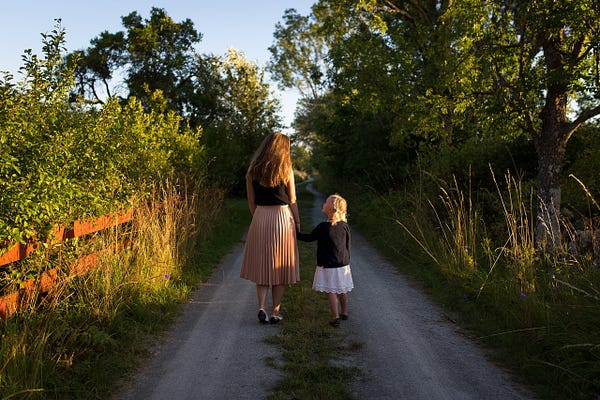
What has struck me more and more as the years have gone by is just how many parallels exist between the two roles, and how much learning I can apply from one role to the other. It extends in both directions too and not just in how being a project manager has helped me as a parent, but also vice-versa.
When I refer to ‘they’, ‘them’ or ‘their’ in the two examples below I’m referencing my kids at home or my co-workers at work. Co-workers also applies equally to those who I manage in delivery of my projects and the senior managers that I report to. The two key similarities are as follows:
1) They just want to be heard and acknowledged – There are few settings within which we spend so much of our lives in as the workplace and for many it can be a crushingly anonymous place where the many drones servicing the greater needs of the hive feel like their efforts are lost and unappreciated. I often experience instances where those both above and beneath me in the supposed hierarchy bringing problems, challenges or items of risk that if not averted will knock things off course. My natural reaction as a goal-oriented and solution-focussed person is to leap into action and to try and solve the issues presented at face-value. Only in the last few years with growing self-awareness and a deeper appreciation for human behaviour (in myself and others) have I recognised that seldom does what I hear really represent the whole story.
In my experience the issue that is brought to me may be a symptom of a wider issue or a general concern that the person with the worries has used as a means of voicing their dissatisfaction. Often-times, it won’t even be something that they needs to be changed or solved but rather that they are just using it as an opportunity to get their voices heard. Many times they don’t even want it to be solved but simply crave recognition from you, the acknowledgement of their existence. Others feel it is their role (whether explicitly or implicitly) to be a source of stretch and challenge as you make your way through working life. As such, they are mainly serving the needs of their ego.
The preferred reaction I’ve learned then is always first and foremost to hear the challenge and to demonstrate that you have taken it on-board and are taking it seriously. This may be closely followed by efforts to investigate and resolve, but it doesn’t always require that.
For my kids I’m often in exactly the same position. I’m fortunate to have nurtured a bond where my kids feel comfortable in bringing their stuff to me, and whereby they can respectfully and maturely communicate their dissatisfactions without resorting to the stereotypical ‘I hate you’ mode of teenage communication (most of the time). That doesn’t mean that things are always as they seem on the surface.
Sometimes they just want a bit of attention, and for kids (and co-workers at times) any attention is good attention.
In the midst of the noise of our day-to-day lives, with the many and varied challenges of work and family life to balance we can become oblivious to those things right in front of us and which we say we value the most. Kids have their own similar battles and alongside school work, their hobbies, dreams and aspirations, they need to carve out their niche in the modern world of social networks and instant gratification. Often they too feel the need to throw on the emergency brake and to feel like they’ve been brought to the forefront of our minds for a few minutes so that they don’t have to compete with all the other things going on in our lives.
When my daughter complains of a stomach-ache, the underlying concern may not be a medical issue which has me instantly reaching for the medical-kit to remedy, but rather nervousness about an impending test at school or a challenging sports game that is coming up. When one of them has a temper-tantrum and attempts to act-up or to get a reaction out of me by making provocative statements it is often not driven out of a lack of care or consideration but because she has had an argument with a friend or misses her mother. Sometimes it’s just hormones throwing her off balance, clouding her ability to deal with a simple day-to-day event.
The challenge then is in both taking things at face-value but in remaining open-minded enough to consider other angles, other sides of the same coin. Often I find I’ve done my bit merely by opening my ears and demonstrating that I’ve heard what they have to say; that I’ve listened to and acknowledged them above all the other noise in life.
2) They want to please me but also crave praise and recognition for their efforts – When asked at work by a team member what it is that I expect of or need from them my answer is often that I simply want them to do their best and make me look good. I apply the same logic towards my bosses and my role in their world. If each person spent their time trying to do the best for themselves and for the person who was in some way responsible for them, then I contend that the whole system would function a lot better and more consistently than it does. If I’m driven to do the best job I can in whatever role I’m playing in a given moment, then the knock-on effects of it will be positive for those around me.
The flip-side of that action, the counter-balance if you like is in the recognition of those efforts which we all crave in life from those to whom we are accountable. This is the feedback on our having delivered value, the validation of our efforts and the sense of gratitude that we feel from those we have served in some way.
At work there’s the reward and feedback of remuneration, and being paid for a job well done, but as theories of organisational behaviour show us, pay and rations alone do not motivate. It is the kindly words, favourable conditions and positive feedback along with the opportunity to grow and feel valued that give rise to the illusive trait of employee satisfaction and which get the best out of us at work.
With my kids, I may feel like I’m doing my bit by giving them a comfortable home, keeping them fed and clothed and buying them the occasional gift to demonstrate my love and care for them. It is the kindly words however that make the most difference, the feelings of love and pride I express to them on a regular basis, the lunchbox notes I send to offer them mid-day encouragement and just the act of ‘showing up’ for them throughout their lives that have grown and nurtured the bond I enjoy with them. Pay and rations come to be relied upon in our personal relationships too, but it is the gratitude and recognition we show for others and their efforts that let them know that we aren’t simply taking them for granted.
To labour under the misapprehension that we should be one person at work and another entirely at home fails to acknowledge the point that we can all only really be the unique people that we are in each and every role. We have our DNA, we have our in-built programming and we have the lessons we’ve learned to apply throughout our lives in each and every role. We can grow and we can adapt but we cannot bend ourselves into something that we are not and nor should we.
Take the skills and experience that you have, innately and within you and exploit those in each role you fulfil. Be true to yourself and mindful of who you are and how you act. I contend that more often than not you’ll find that the many resources you have in one area of life (that you may consider to be your sweet-spot) can in fact be brought to bear in other areas of your life too if you open your mind to what you know and what you can learn in each role.
Toby
Whether reflecting upon how I’ve been tackling a problem, only to see a completely different way of doing it that immediately seems obvious, or looking back and realizing that I could have handled something a lot better, the net effect is usually much the same; I can’t believe that I didn’t figure it out sooner.
I’ve been pondering lately the best way of tackling a couple of ongoing challenges in my life, namely how to get the best out of my co-workers (both those above and beneath me in the corporate food-chain) and how best to get my kids to do what I want and expect from them; in both cases I’m largely precluded from considering sanctions, bribery or coercion as options and so I’m left wondering how best to achieve my goal through more subtle means.
I’ve not yet got all the answers, but verging on 20 years into my career, and in my 18th year as a parent I’m starting to build up a useful play-book of techniques.
First, a little context.
In my working life I’m far from your typical ‘manager’ and I’ve deliberately chosen a career path that aligns most closely with my being a goal and delivery focussed individual. When I’m not writing, I mostly work as a freelance IT Project Manager and have long since given up the desire to climb to levels of seniority in that field. Give me a challenge and a problem to solve and I’m in my element. What job title I’m given or how many people work beneath me is completely irrelevant and outside of my interest.
Since stepping onto the first rung of the career ladder I’ve occasionally tried and largely failed to carve out a niche as an out-and-out people-manager since I’m just no good at taking on the challenges of personnel management and have no desire to engage in the politics and general ass-kissing that seem to be a necessity to escape beyond middle-management. I’d sooner work with and organise people to whom I can give the professional courtesy of assuming they are competent, capable and reasonably committed to the job in hand rather than having to concern myself with matters of pastoral care or ‘HR’. Give me a person with the right skills and I’ll happily co-ordinate and guide their actions to achieve the greater-good; just don’t ask me to conduct a career appraisal for them or to help them settle their personal or professional grievances.
I’m completely at one with my motivation towards work, and in myself since I know that my core values are aligned to setting measurable and meaningful goals and then motivating myself (and others) towards their achievement. This holds in my life outside work too.
In my personal life, I’m part-time single parent to two teenage daughters who I’ve raised 50% of the time with their mother, my ex-wife for over 11 years. I’m also step-father to two younger kids that my second wife brought into our marriage, from her first. As such, there’s a fair amount of stakeholder management in my personal life too.
What has struck me more and more as the years have gone by is just how many parallels exist between the two roles, and how much learning I can apply from one role to the other. It extends in both directions too and not just in how being a project manager has helped me as a parent, but also vice-versa.
When I refer to ‘they’, ‘them’ or ‘their’ in the two examples below I’m referencing my kids at home or my co-workers at work. Co-workers also applies equally to those who I manage in delivery of my projects and the senior managers that I report to. The two key similarities are as follows:
1) They just want to be heard and acknowledged – There are few settings within which we spend so much of our lives in as the workplace and for many it can be a crushingly anonymous place where the many drones servicing the greater needs of the hive feel like their efforts are lost and unappreciated. I often experience instances where those both above and beneath me in the supposed hierarchy bringing problems, challenges or items of risk that if not averted will knock things off course. My natural reaction as a goal-oriented and solution-focussed person is to leap into action and to try and solve the issues presented at face-value. Only in the last few years with growing self-awareness and a deeper appreciation for human behaviour (in myself and others) have I recognised that seldom does what I hear really represent the whole story.
In my experience the issue that is brought to me may be a symptom of a wider issue or a general concern that the person with the worries has used as a means of voicing their dissatisfaction. Often-times, it won’t even be something that they needs to be changed or solved but rather that they are just using it as an opportunity to get their voices heard. Many times they don’t even want it to be solved but simply crave recognition from you, the acknowledgement of their existence. Others feel it is their role (whether explicitly or implicitly) to be a source of stretch and challenge as you make your way through working life. As such, they are mainly serving the needs of their ego.
The preferred reaction I’ve learned then is always first and foremost to hear the challenge and to demonstrate that you have taken it on-board and are taking it seriously. This may be closely followed by efforts to investigate and resolve, but it doesn’t always require that.
For my kids I’m often in exactly the same position. I’m fortunate to have nurtured a bond where my kids feel comfortable in bringing their stuff to me, and whereby they can respectfully and maturely communicate their dissatisfactions without resorting to the stereotypical ‘I hate you’ mode of teenage communication (most of the time). That doesn’t mean that things are always as they seem on the surface.
Sometimes they just want a bit of attention, and for kids (and co-workers at times) any attention is good attention.
In the midst of the noise of our day-to-day lives, with the many and varied challenges of work and family life to balance we can become oblivious to those things right in front of us and which we say we value the most. Kids have their own similar battles and alongside school work, their hobbies, dreams and aspirations, they need to carve out their niche in the modern world of social networks and instant gratification. Often they too feel the need to throw on the emergency brake and to feel like they’ve been brought to the forefront of our minds for a few minutes so that they don’t have to compete with all the other things going on in our lives.
When my daughter complains of a stomach-ache, the underlying concern may not be a medical issue which has me instantly reaching for the medical-kit to remedy, but rather nervousness about an impending test at school or a challenging sports game that is coming up. When one of them has a temper-tantrum and attempts to act-up or to get a reaction out of me by making provocative statements it is often not driven out of a lack of care or consideration but because she has had an argument with a friend or misses her mother. Sometimes it’s just hormones throwing her off balance, clouding her ability to deal with a simple day-to-day event.
The challenge then is in both taking things at face-value but in remaining open-minded enough to consider other angles, other sides of the same coin. Often I find I’ve done my bit merely by opening my ears and demonstrating that I’ve heard what they have to say; that I’ve listened to and acknowledged them above all the other noise in life.
2) They want to please me but also crave praise and recognition for their efforts – When asked at work by a team member what it is that I expect of or need from them my answer is often that I simply want them to do their best and make me look good. I apply the same logic towards my bosses and my role in their world. If each person spent their time trying to do the best for themselves and for the person who was in some way responsible for them, then I contend that the whole system would function a lot better and more consistently than it does. If I’m driven to do the best job I can in whatever role I’m playing in a given moment, then the knock-on effects of it will be positive for those around me.
The flip-side of that action, the counter-balance if you like is in the recognition of those efforts which we all crave in life from those to whom we are accountable. This is the feedback on our having delivered value, the validation of our efforts and the sense of gratitude that we feel from those we have served in some way.
At work there’s the reward and feedback of remuneration, and being paid for a job well done, but as theories of organisational behaviour show us, pay and rations alone do not motivate. It is the kindly words, favourable conditions and positive feedback along with the opportunity to grow and feel valued that give rise to the illusive trait of employee satisfaction and which get the best out of us at work.
With my kids, I may feel like I’m doing my bit by giving them a comfortable home, keeping them fed and clothed and buying them the occasional gift to demonstrate my love and care for them. It is the kindly words however that make the most difference, the feelings of love and pride I express to them on a regular basis, the lunchbox notes I send to offer them mid-day encouragement and just the act of ‘showing up’ for them throughout their lives that have grown and nurtured the bond I enjoy with them. Pay and rations come to be relied upon in our personal relationships too, but it is the gratitude and recognition we show for others and their efforts that let them know that we aren’t simply taking them for granted.
Putting it in action
I most certainly don’t have all the answers on this topic (or any other); I’m a student of life just as much as we all are and I’m grateful for the fact that I’m continually learning new things and reaching new insights about myself and how I interact with others. What I have realised though is that it’s not simply a case of having diverse and separate roles in life that I need to master but rather that many of the roles (parent, worker, friend, husband) rely on many of the same traits, skills and techniques if I’m to perform them to my desired standard.To labour under the misapprehension that we should be one person at work and another entirely at home fails to acknowledge the point that we can all only really be the unique people that we are in each and every role. We have our DNA, we have our in-built programming and we have the lessons we’ve learned to apply throughout our lives in each and every role. We can grow and we can adapt but we cannot bend ourselves into something that we are not and nor should we.
Take the skills and experience that you have, innately and within you and exploit those in each role you fulfil. Be true to yourself and mindful of who you are and how you act. I contend that more often than not you’ll find that the many resources you have in one area of life (that you may consider to be your sweet-spot) can in fact be brought to bear in other areas of your life too if you open your mind to what you know and what you can learn in each role.
Toby
Sunday, 9 April 2017
Overcoming The 7 Fears with Dr. John Demartini
A brief video interview with the brilliant Dr John DeMartini touching upon his book 'The Values Factor' and linking the need for goals we set to align to our core values.
Check out the video, then check out the book and let me know what you think!
Sunday, 26 February 2017
How Gratitude Can Change Your Life
“If the only prayer you say in your life is ‘thank you,’ that would suffice.”
– Meister Eckhart
Gratitude means thankfulness, counting your blessings, noticing simple pleasures, and acknowledging everything that you receive. It means learning to live your life as if everything were a miracle, and being aware on a continuous basis of how much you’ve been given. Gratitude shifts your focus from what your life lacks to the abundance that is already present. In addition, behavioral and psychological research has shown the surprising life improvements that can stem from the practice of gratitude. Giving thanks makes people happier and more resilient, it strengthens relationships, it improves health, and it reduces stress.


RESEARCH SHOWS GRATITUDE HEIGHTENS QUALITY OF LIFE
Two psychologists, Michael McCollough of Southern Methodist University in Dallas, Texas, and Robert Emmons of the University of California at Davis, wrote an article about an experiment they conducted on gratitude and its impact on well-being. The study split several hundred people into three different groups and all of the participants were asked to keep daily diaries. The first group kept a diary of the events that occurred during the day without being told specifically to write about either good or bad things; the second group was told to record their unpleasant experiences; and the last group was instructed to make a daily list of things for which they were grateful. The results of the study indicated that daily gratitude exercises resulted in higher reported levels of alertness, enthusiasm, determination, optimism, and energy. In addition, those in the gratitude group experienced less depression and stress, were more likely to help others, exercised more regularly, and made greater progress toward achieving personal goals.
Dr. Emmons – who has been studying gratitude for almost ten years and is considered by many to be the world’s leading authority on gratitude – is author of the book, “Thanks!: How the New Science of Gratitude Can Make You Happier ”. The information in this book is based on research involving thousands of people conducted by a number of different researchers around the world. One of the things these studies show is that practicing gratitude can increase happiness levels by around 25%. This is significant, among other things, because just as there’s a certain weight that feels natural to your body and which your body strives to maintain, your basic level of happiness is set at a predetermined point. If something bad happens to you during the day, your happiness can drop momentarily, but then it returns to its natural set-point. Likewise, if something positive happens to you, your level of happiness rises, and then it returns once again to your “happiness set-point”. A practice of gratitude raises your “happiness set-point” so you can remain at a higher level of happiness regardless of outside circumstances.
”. The information in this book is based on research involving thousands of people conducted by a number of different researchers around the world. One of the things these studies show is that practicing gratitude can increase happiness levels by around 25%. This is significant, among other things, because just as there’s a certain weight that feels natural to your body and which your body strives to maintain, your basic level of happiness is set at a predetermined point. If something bad happens to you during the day, your happiness can drop momentarily, but then it returns to its natural set-point. Likewise, if something positive happens to you, your level of happiness rises, and then it returns once again to your “happiness set-point”. A practice of gratitude raises your “happiness set-point” so you can remain at a higher level of happiness regardless of outside circumstances.
In addition, Dr. Emmons’ research shows that those who practice gratitude tend to be more creative, bounce back more quickly from adversity, have a stronger immune system, and have stronger social relationships than those who don’t practice gratitude. He further points out that “To say we feel grateful is not to say that everything in our lives is necessarily great. It just means we are aware of our blessings.”
NOTICE AND APPRECIATE EACH DAY’S GIFTS
People tend to take for granted the good that is already present in their lives. There’s a gratitude exercise that instructs that you should imagine losing some of the things that you take for granted, such as your home, your ability to see or hear, your ability to walk, or anything that currently gives you comfort. Then imagine getting each of these things back, one by one, and consider how grateful you would be for each and every one. In addition, you need to start finding joy in the small things instead of holding out for big achievements—such as getting the promotion, having a comfortable nest egg saved up, getting married, having the baby, and so on–before allowing yourself to feel gratitude and joy.
Another way to use giving thanks to appreciate life more fully is to use gratitude to help you put things in their proper perspective. When things don’t go your way, remember that every difficulty carries within it the seeds of an equal or greater benefit. In the face of adversity ask yourself: “What’s good about this?”, “What can I learn from this?”, and “How can I benefit from this?”
THERE ARE MANY WAYS TO PRACTICE GRATITUDE
A common method to develop the practice of gratitude is to keep a gratitude journal, a concept that was made famous by Sarah Ban Breathnach’s book “Simple Abundance Journal of Gratitude ”. This exercise basically consists of writing down every day a list of three to ten things for which you are grateful; you can do this first thing in the morning or before going to bed at night. Another exercise you can try is to write a gratitude letter to a person who has exerted a positive influence in your life but whom you have not properly thanked. Some experts suggest that you set up a meeting with this person and read the letter to them face to face.

”. This exercise basically consists of writing down every day a list of three to ten things for which you are grateful; you can do this first thing in the morning or before going to bed at night. Another exercise you can try is to write a gratitude letter to a person who has exerted a positive influence in your life but whom you have not properly thanked. Some experts suggest that you set up a meeting with this person and read the letter to them face to face.
Last year millions of people took the challenge proposed by Will Bowen, a Kansas City minister, to go 21 days without complaining, criticizing, or gossiping. To help condition the participants to stop complaining, they each wore a purple No-Complaint wristband. Several authors in the self-improvement genre have suggested that people do something similar to help condition themselves to be constantly aware of the things in life that they’re grateful for.
A variation of the wristband concept is to create a gratitude charm bracelet, with either one meaningful charm or different charms representing the things you’re most grateful for. For example, you could have a charm shaped like a heart to symbolize your significant other, figurines to represent different family members, an apple to represent health, a dollar sign to symbolize abundance, a charm that represents your current profession or a future career, and maybe a charm that makes you laugh to represent humor and joy.
CONCLUSION
Once you become oriented toward looking for things to be grateful for, you will find that you begin to appreciate simple pleasures and things that you previously took for granted. Gratitude should not be just a reaction to getting what you want, but an all-the-time gratitude, the kind where you notice the little things and where you constantly look for the good even in unpleasant situations. Today, start bringing gratitude to your experiences, instead of waiting for a positive experience in order to feel grateful; in this way, you’ll be on your way toward becoming a master of gratitude.
Friday, 24 February 2017
Arnold's 6 Rules Of Success (Full Speech)
Wise words from a really wise guy! I'm a big fan of Arnold Schwarzenegger and inspired by all he has done in life.
What do you think?
Thursday, 23 February 2017
The Hero In You - Motivational Video
There's some interesting motivating speeches cut over the visuals in this video, if you can just look past the extensive Hollywood snippets. I hope you enjoy it!
Tuesday, 21 February 2017
In Praise of Gratitude
Expressing thanks may be one of the simplest ways to feel better.

The Thanksgiving holiday began, as the name implies, when the colonists gave thanks for their survival and for a good harvest. So perhaps November is a good time to review the mental health benefits of gratitude — and to consider some advice about how to cultivate this state of mind.
The word gratitude is derived from the Latin word gratia, which means grace, graciousness, or gratefulness (depending on the context). In some ways gratitude encompasses all of these meanings. Gratitude is a thankful appreciation for what an individual receives, whether tangible or intangible. With gratitude, people acknowledge the goodness in their lives. In the process, people usually recognize that the source of that goodness lies at least partially outside themselves. As a result, gratitude also helps people connect to something larger than themselves as individuals — whether to other people, nature, or a higher power.
In positive psychology research, gratitude is strongly and consistently associated with greater happiness. Gratitude helps people feel more positive emotions, relish good experiences, improve their health, deal with adversity, and build strong relationships.
People feel and express gratitude in multiple ways. They can apply it to the past (retrieving positive memories and being thankful for elements of childhood or past blessings), the present (not taking good fortune for granted as it comes), and the future (maintaining a hopeful and optimistic attitude). Regardless of the inherent or current level of someone's gratitude, it's a quality that individuals can successfully cultivate further.
Research on gratitude
Two psychologists, Dr. Robert A. Emmons of the University of California, Davis, and Dr. Michael E. McCullough of the University of Miami, have done much of the research on gratitude. In one study, they asked all participants to write a few sentences each week, focusing on particular topics.
One group wrote about things they were grateful for that had occurred during the week. A second group wrote about daily irritations or things that had displeased them, and the third wrote about events that had affected them (with no emphasis on them being positive or negative). After 10 weeks, those who wrote about gratitude were more optimistic and felt better about their lives. Surprisingly, they also exercised more and had fewer visits to physicians than those who focused on sources of aggravation.
Another leading researcher in this field, Dr. Martin E. P. Seligman, a psychologist at the University of Pennsylvania, tested the impact of various positive psychology interventions on 411 people, each compared with a control assignment of writing about early memories. When their week's assignment was to write and personally deliver a letter of gratitude to someone who had never been properly thanked for his or her kindness, participants immediately exhibited a huge increase in happiness scores. This impact was greater than that from any other intervention, with benefits lasting for a month.
Of course, studies such as this one cannot prove cause and effect. But most of the studies published on this topic support an association between gratitude and an individual's well-being.
Other studies have looked at how gratitude can improve relationships. For example, a study of couples found that individuals who took time to express gratitude for their partner not only felt more positive toward the other person but also felt more comfortable expressing concerns about their relationship.
Managers who remember to say "thank you" to people who work for them may find that those employees feel motivated to work harder. Researchers at the Wharton School at the University of Pennsylvania randomly divided university fund-raisers into two groups. One group made phone calls to solicit alumni donations in the same way they always had. The second group — assigned to work on a different day — received a pep talk from the director of annual giving, who told the fund-raisers she was grateful for their efforts. During the following week, the university employees who heard her message of gratitude made 50% more fund-raising calls than those who did not.
There are some notable exceptions to the generally positive results in research on gratitude. One study found that middle-aged divorced women who kept gratitude journals were no more satisfied with their lives than those who did not. Another study found that children and adolescents who wrote and delivered a thank-you letter to someone who made a difference in their lives may have made the other person happier — but did not improve their own well-being. This finding suggests that gratitude is an attainment associated with emotional maturity.
Ways to cultivate gratitude
Gratitude is a way for people to appreciate what they have instead of always reaching for something new in the hopes it will make them happier, or thinking they can't feel satisfied until every physical and material need is met. Gratitude helps people refocus on what they have instead of what they lack. And, although it may feel contrived at first, this mental state grows stronger with use and practice.
Here are some ways to cultivate gratitude on a regular basis.
Write a thank-you note. You can make yourself happier and nurture your relationship with another person by writing a thank-you letter expressing your enjoyment and appreciation of that person's impact on your life. Send it, or better yet, deliver and read it in person if possible. Make a habit of sending at least one gratitude letter a month. Once in a while, write one to yourself.
Thank someone mentally. No time to write? It may help just to think about someone who has done something nice for you, and mentally thank the individual.
Keep a gratitude journal. Make it a habit to write down or share with a loved one thoughts about the gifts you've received each day.
Count your blessings. Pick a time every week to sit down and write about your blessings — reflecting on what went right or what you are grateful for. Sometimes it helps to pick a number — such as three to five things — that you will identify each week. As you write, be specific and think about the sensations you felt when something good happened to you.
Pray. People who are religious can use prayer to cultivate gratitude.
Meditate. Mindfulness meditation involves focusing on the present moment without judgment. Although people often focus on a word or phrase (such as "peace"), it is also possible to focus on what you're grateful for (the warmth of the sun, a pleasant sound, etc.).
Emmons RA, et al. "Counting Blessings Versus Burdens: An Experimental Investigation of Gratitude and Subjective Well-Being in Daily Life," Journal of Personality and Social Psychology (Feb. 2003): Vol. 84, No. 2, pp. 377–89.
Grant AM, et al. "A Little Thanks Goes a Long Way: Explaining Why Gratitude Expressions Motivate Prosocial Behavior," Journal of Personality and Social Psychology (June 2010): Vol. 98, No. 6, pp. 946–55.
Lambert NM, et al. "Expressing Gratitude to a Partner Leads to More Relationship Maintenance Behavior," Emotion (Feb. 2011): Vol. 11, No. 1, pp. 52–60.
Sansone RA, et al. "Gratitude and Well Being: The Benefits of Appreciation," Psychiatry (Nov. 2010): Vol. 7, No. 11, pp. 18–22.
Seligman MEP, et al. "Empirical Validation of Interventions," American Psychologist (July–Aug. 2005): Vol. 60, No. 1, pp. 410–21.
Sunday, 19 February 2017
6 Habits That Turn Dreams Into Reality
The secret of turning wishful thinking into a life of action and achievement.
When I was growing up, I wanted to be an entrepreneur. I discussed this aspiration with career advisors, family and friends. I outlined my plans in university student kitchens at three in the morning. It was the main conversation in the staff cafeteria of the large corporation I joined to tide me over until I launched my enterprise. I met up with an old friend whom I had not seen for fifteen years, and we chatted about old times. After the talk of foreign assignments, pension plans and leadership roles had died off, I mentioned that I was looking to start my own company. My friend took my hands in hers, looked me in the eye and said, “Ric, you´ve been talking about that dream for twenty years. Don´t you think it´s time to do something about it?”

Walt Disney once said, “The way to get started is to quit talking and begin doing.” I finally turned my dream into a reality, not by wishing upon a star, but by converting it into a concrete vision. Today, I own my own leadership development company.
Dreams and visions are quite different.
Dreams are… Visions are…
Inward looking
Ephemeral Aspirational |
Outward looking
Enduring Intentional |
A dream is something, a vision does something; a dream is a place to be, a vision is a place to go. A vision, in other words, is more structured, intentional, enduring and rooted in daily living than mere wishful thinking.
Related: Richard Branson: The Key to Success Is Intention
In his seminal text, The Path of Least Resistance, Robert Fritz describes a vision as a hybrid between future state (the result you want to create) and current reality (the starting point). Fritz argues there is an inherent tension between these two states that can help you “organize your actions, focus your values, and clearly see what is relevant in current reality.”
Moving from one to the other.
And herein lies the secret of turning ephemeral dreams into tangible outcomes, of launching that company that's been on the bucket list for decades, or publishing that novel that´s been languishing in the bottom drawer since the dawn of time -- it´s being able to structure the dream into something that inspires action and momentum.
Here are six habits that can help turn dreams into tangible outcomes:
1. Materialize your dream using visualization.
Visualization, or what Shakti Gowain calls ‘Creative visualization’ in her book of the same title, is a technique in creating what you want from life using the power of imagination. Using some common visualization techniques can help participants convert their dreams into future possibilities. Sportsmen and women, for example, use visualization to inspire them toward excellence and success in competitive events. Visualization techniques are also widely used in business contexts for people to create goals and aspirations for themselves.
Related: 4 Visualization Techniques That Can Propel Your Success
2. Prioritize your dreams.
One of the habits in Covey´s Seven Habits of Highly Effective People, is to begin with the end in mind. Having a clear idea of what you want to achieve and being able to prioritize sundry aspirations into a single sustainable “highest goal,” as Michael Ray terms it, is a way of beginning to work strategically with your dreams. Goals should have a degree of tension --not too removed from current reality (which will make them impossible to achieve), neither should they be easily attainable. Consider an elastic band. A slack elastic band has no tension. An overstretched elastic band can snap. Fixing a goal which is challenging, but not impossible, motivates us to work toward our vision. Fritz says in Creating, “In fire building, a log on top of the pile will drive the flames upward. In the creative process, a place that is bigger and higher than where you have gone so far can increase momentum, energy and creative power.”
3. Set key milestones.
Warren Bennis once said, “Mountain climbers don’t start climbing from the bottom of the mountain. They look at where they want to go and work backward to where they’re starting from.” It is the same for goal setting -- when you begin with the end in mind and set an action plan, you can begin to work backwards and set interim goals which advance you toward your vision. Achieving things in small incremental steps has great power. Professor Stephen Morris posited a theory that if dominoes were lined up starting with five millimeters and increasing in size by one and half times, it will take just 29 dominoes to knock over the Empire State Building. Best-selling author, Ramit Sethi,applies this principle to goal setting in his domino strategy which advocates starting small and creating momentum through incremental steps.
Related: How Marking Milestones Boosts Employee Productivity
4. Monitor progress.
One of the benefits of a structured approach to goal and vision setting is that individuals can clearly see how each action and effort propels them toward their highest goal. This helps build momentum and motivation. Dreams, on the other hand, are wispy by nature and it can be baffling to know how to get a handle on them.
5. Enlist support.
Dreams that are not anchored in reality and lack structure or outcome can be crushed by “dream stealers.” In his poem, "The Cloths of Heaven," WB Yeats writes: "I have spread my dreams under your feet; Tread softly because you tread on my dreams."
A realistic, goal-orientated vision withstands all these negative forces and increases the likelihood of people sharing their vision. In his book Synchronicity, Joe Jaworski explores the positive outcomes of openly sharing structured goals and visions -- people begin to understand your aspirations and priorities and how they can contribute to your success.
6. Know when to give up.
I know we are taught through motivational stories that we can achieve whatever we put our minds to and make our dreams come true; but as Robert Fritz says, goal attainment is linked to current reality. Give up on those unrealistic dreams that suck up your energy and creativity and set achievable aspirations -- otherwise that elastic band will keep snapping in your face.
We should never stop dreaming; after all, our dreams are what makes us human. They shape and guide us. But there is a world of difference between being a dreamer and transitioning your dreams into something tangible. This ability to build personal momentum and achieve realistic objectives is the cornerstone of self-mastery, and every effective entrepreneur that I have ever met gets this right.
Subscribe to:
Posts (Atom)