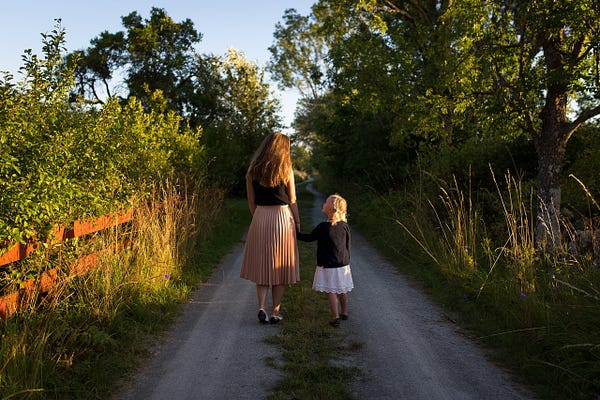
You deserve some recognition and to know that you are amazing.
Nobody ever mentions the single dads.
And they are out there.
My kids have one.
They hardly mention the dads who became moms, or the dads who still sent their ex flowers from her little kids on mother’s day because they couldn’t yet -the dad who loves his kids more than he is bitter toward his ex.
We see post after post on social media about single moms having a hard life, harder than ours.
We read about how good of a job they are doing to teach their sons not to be like their deadbeat father, and how strong they are doing this all alone.
We see posts titled 10 reasons single mom’s rock, making points about how they are used to handling everything on their own, and how good they’ve gotten at juggling things with no time to themselves, all while they work two jobs to make ends meet.
My hat is off to them.
I respect you because as a “single mom” myself, I have not had to endure that. Which means my kids, who are the most important part of all of this, have not either.
It’s not easy as a single dad going to the park alone with your children, knowing everyone suspects you are there so that mommy can have some me time.
But what about the moms who are single but not alone because the man they left behind may have been an unexceptional husband, but is an exceptional father. For us, it feels weird to call ourselves “single moms” because we are technically single, but not single in the raising of our children.
We are lucky.
We may not say it enough, maybe some of us don’t recognize it from the bitterness and strain that comes from a divorce or a breakup, but we are lucky to end up with these kinds of men. As strange as it sounds, we are lucky these are the types of the men we started a family with, even though we won’t end as a family in the traditional sense.
What about the moms who got divorced or left not so perfect husbands, but amazing fathers? The moms who share joint custody, and only see their kids 50% of the time? It seems like we have it easy, and sometimes, in some instances, we do.
We know that.
We feel lucky, even though just as we are getting back into a routine with our kids, it’s time for them to go again. It makes us sad because they are being shuffled between houses, and we selfishly want to be there 24/7, but happy at the same time they have a relationship with their dad.
The relationship they should have, and deserve to have.
We are judged on how often they switch homes, but we ignore it because we know how important it is to keep a consistent relationship with their dad when he is a genuinely great person, and focused on making them the best they can possibly be, just as much as we are.
You single dads may feel stupid for treating your ex so well when so many men don’t. But you are not stupid. You are amazing. It’s hard, really hard. Men need to cut all ties when moving on from a relationship and you can’t do that when you are a parent.
At least not if you are a good one.
To the one’s that stay, I admire you, and I thank you for setting such an amazing example for your daughters, and especially your son’s. They are watching how you treat their mother.
You are so awesome that you feel guilty when there is tension between you and your ex, momentarily forgetting the agonizing tension in your house when you were together. You’re not realizing the chaos the boy in the house next door calls life, where the mom and dad are screaming out of frustration while her little boy whom she thinks is sleeping in the next room is listening because they think they have to stay for their kids. You feel guilty that you are not in their lives one hundred percent of the time, but you are in their lives 100% of the time you just don’t realize that yet. You don’t realize that some fathers who are physically there all of the time are hurting their children more than helping them.
You will realize one day how great of a job you are doing, and that just because you did not do a great job in your marriage, it says nothing about the way you parent. I promise you will realize how much what you are doing now, the way you act in front of your kids and make decisions based on them and not your feelings towards her affect them in a positive way and will trickle down into the rest of their lives shaping them into better people.
And I can’t wait to watch them grow into the wonderful men who treat their women with such respect, and beautiful daughters who have high standards and know what they are deserving of because of you.
It’s hard to remember this in the hard times. Even though you may have exchanged some hurtful words two days ago in a text message, you learn to let it go for them.
You learn to move on from the things she does that drive you absolutely mad and remind you why you could never be with her, but your kids would never know that because you treat her with nothing but respect when they are around.
That’s not easy. There is a reason you separated.
It’s not easy as a single dad going to the park alone with your children, knowing everyone suspects you are there so that mommy can have some me time. When in reality, after the fun is over you still have to bring them home, cook dinner, do potty time, and give baths, all while they are tugging at your leg to play Spiderman.
Eventually, you realize it isn’t worth being angry over, you aren’t together anymore. And that makes you sad your family is no longer together, but I hope you realize how happy you make your children when you drop them off and you say hi to their mom instead of avoiding eye contact and slamming the door.
I know it makes you sad every single time you watch her walk away with them after a long weekend, it makes you feel like you have been punched in the gut and feeling like you should be walking right beside them. But I hope you know how happy you make your children when they excitedly lose their first tooth, and you say “l will send mommy a picture.” It’s amazing they aren’t afraid to speak about their mom to you when so many other little kids with divorced parents are afraid.
You can never know what that possibly means to them -knowing that you are a still a team, that you still love them together even though you are not together.
You deserve some recognition and to know that you are amazing.
I wish all fathers were like you. You make us better mothers, and you are molding your kids into the kind of people we need most in this world right now.
Source: https://goodmenproject.com/families/to-the-good-single-dads-from-a-single-mom-bbab/
It pleases me when I learn something new about myself. It’s not just the wonderment that an old-dog can indeed learn new tricks, but also shock (bordering on dismay) that I didn’t already know it all.
Whether reflecting upon how I’ve been tackling a problem, only to see a completely different way of doing it that immediately seems obvious, or looking back and realizing that I could have handled something a lot better, the net effect is usually much the same; I can’t believe that I didn’t figure it out sooner.
I’ve been pondering lately the best way of tackling a couple of ongoing challenges in my life, namely how to get the best out of my co-workers (both those above and beneath me in the corporate food-chain) and how best to get my kids to do what I want and expect from them; in both cases I’m largely precluded from considering sanctions, bribery or coercion as options and so I’m left wondering how best to achieve my goal through more subtle means.
I’ve not yet got all the answers, but verging on 20 years into my career, and in my 18th year as a parent I’m starting to build up a useful play-book of techniques.
First, a little context.
In my working life I’m far from your typical ‘manager’ and I’ve deliberately chosen a career path that aligns most closely with my being a goal and delivery focussed individual. When I’m not writing, I mostly work as a freelance IT Project Manager and have long since given up the desire to climb to levels of seniority in that field. Give me a challenge and a problem to solve and I’m in my element. What job title I’m given or how many people work beneath me is completely irrelevant and outside of my interest.
Since stepping onto the first rung of the career ladder I’ve occasionally tried and largely failed to carve out a niche as an out-and-out people-manager since I’m just no good at taking on the challenges of personnel management and have no desire to engage in the politics and general ass-kissing that seem to be a necessity to escape beyond middle-management. I’d sooner work with and organise people to whom I can give the professional courtesy of assuming they are competent, capable and reasonably committed to the job in hand rather than having to concern myself with matters of pastoral care or ‘HR’. Give me a person with the right skills and I’ll happily co-ordinate and guide their actions to achieve the greater-good; just don’t ask me to conduct a career appraisal for them or to help them settle their personal or professional grievances.
I’m completely at one with my motivation towards work, and in myself since I know that my core values are aligned to setting measurable and meaningful goals and then motivating myself (and others) towards their achievement. This holds in my life outside work too.
In my personal life, I’m part-time single parent to two teenage daughters who I’ve raised 50% of the time with their mother, my ex-wife for over 11 years. I’m also step-father to two younger kids that my second wife brought into our marriage, from her first. As such, there’s a fair amount of stakeholder management in my personal life too.
What has struck me more and more as the years have gone by is just how many parallels exist between the two roles, and how much learning I can apply from one role to the other. It extends in both directions too and not just in how being a project manager has helped me as a parent, but also vice-versa.
When I refer to ‘they’, ‘them’ or ‘their’ in the two examples below I’m referencing my kids at home or my co-workers at work. Co-workers also applies equally to those who I manage in delivery of my projects and the senior managers that I report to. The two key similarities are as follows:
1) They just want to be heard and acknowledged – There are few settings within which we spend so much of our lives in as the workplace and for many it can be a crushingly anonymous place where the many drones servicing the greater needs of the hive feel like their efforts are lost and unappreciated. I often experience instances where those both above and beneath me in the supposed hierarchy bringing problems, challenges or items of risk that if not averted will knock things off course. My natural reaction as a goal-oriented and solution-focussed person is to leap into action and to try and solve the issues presented at face-value. Only in the last few years with growing self-awareness and a deeper appreciation for human behaviour (in myself and others) have I recognised that seldom does what I hear really represent the whole story.
In my experience the issue that is brought to me may be a symptom of a wider issue or a general concern that the person with the worries has used as a means of voicing their dissatisfaction. Often-times, it won’t even be something that they needs to be changed or solved but rather that they are just using it as an opportunity to get their voices heard. Many times they don’t even want it to be solved but simply crave recognition from you, the acknowledgement of their existence. Others feel it is their role (whether explicitly or implicitly) to be a source of stretch and challenge as you make your way through working life. As such, they are mainly serving the needs of their ego.
The preferred reaction I’ve learned then is always first and foremost to hear the challenge and to demonstrate that you have taken it on-board and are taking it seriously. This may be closely followed by efforts to investigate and resolve, but it doesn’t always require that.
For my kids I’m often in exactly the same position. I’m fortunate to have nurtured a bond where my kids feel comfortable in bringing their stuff to me, and whereby they can respectfully and maturely communicate their dissatisfactions without resorting to the stereotypical ‘I hate you’ mode of teenage communication (most of the time). That doesn’t mean that things are always as they seem on the surface.
Sometimes they just want a bit of attention, and for kids (and co-workers at times) any attention is good attention.
In the midst of the noise of our day-to-day lives, with the many and varied challenges of work and family life to balance we can become oblivious to those things right in front of us and which we say we value the most. Kids have their own similar battles and alongside school work, their hobbies, dreams and aspirations, they need to carve out their niche in the modern world of social networks and instant gratification. Often they too feel the need to throw on the emergency brake and to feel like they’ve been brought to the forefront of our minds for a few minutes so that they don’t have to compete with all the other things going on in our lives.
When my daughter complains of a stomach-ache, the underlying concern may not be a medical issue which has me instantly reaching for the medical-kit to remedy, but rather nervousness about an impending test at school or a challenging sports game that is coming up. When one of them has a temper-tantrum and attempts to act-up or to get a reaction out of me by making provocative statements it is often not driven out of a lack of care or consideration but because she has had an argument with a friend or misses her mother. Sometimes it’s just hormones throwing her off balance, clouding her ability to deal with a simple day-to-day event.
The challenge then is in both taking things at face-value but in remaining open-minded enough to consider other angles, other sides of the same coin. Often I find I’ve done my bit merely by opening my ears and demonstrating that I’ve heard what they have to say; that I’ve listened to and acknowledged them above all the other noise in life.
2) They want to please me but also crave praise and recognition for their efforts – When asked at work by a team member what it is that I expect of or need from them my answer is often that I simply want them to do their best and make me look good. I apply the same logic towards my bosses and my role in their world. If each person spent their time trying to do the best for themselves and for the person who was in some way responsible for them, then I contend that the whole system would function a lot better and more consistently than it does. If I’m driven to do the best job I can in whatever role I’m playing in a given moment, then the knock-on effects of it will be positive for those around me.
The flip-side of that action, the counter-balance if you like is in the recognition of those efforts which we all crave in life from those to whom we are accountable. This is the feedback on our having delivered value, the validation of our efforts and the sense of gratitude that we feel from those we have served in some way.
At work there’s the reward and feedback of remuneration, and being paid for a job well done, but as theories of organisational behaviour show us, pay and rations alone do not motivate. It is the kindly words, favourable conditions and positive feedback along with the opportunity to grow and feel valued that give rise to the illusive trait of employee satisfaction and which get the best out of us at work.
With my kids, I may feel like I’m doing my bit by giving them a comfortable home, keeping them fed and clothed and buying them the occasional gift to demonstrate my love and care for them. It is the kindly words however that make the most difference, the feelings of love and pride I express to them on a regular basis, the lunchbox notes I send to offer them mid-day encouragement and just the act of ‘showing up’ for them throughout their lives that have grown and nurtured the bond I enjoy with them. Pay and rations come to be relied upon in our personal relationships too, but it is the gratitude and recognition we show for others and their efforts that let them know that we aren’t simply taking them for granted.
Putting it in action
I most certainly don’t have all the answers on this topic (or any other); I’m a student of life just as much as we all are and I’m grateful for the fact that I’m continually learning new things and reaching new insights about myself and how I interact with others. What I have realised though is that it’s not simply a case of having diverse and separate roles in life that I need to master but rather that many of the roles (parent, worker, friend, husband) rely on many of the same traits, skills and techniques if I’m to perform them to my desired standard.
To labour under the misapprehension that we should be one person at work and another entirely at home fails to acknowledge the point that we can all only really be the unique people that we are in each and every role. We have our DNA, we have our in-built programming and we have the lessons we’ve learned to apply throughout our lives in each and every role. We can grow and we can adapt but we cannot bend ourselves into something that we are not and nor should we.
Take the skills and experience that you have, innately and within you and exploit those in each role you fulfil. Be true to yourself and mindful of who you are and how you act. I contend that more often than not you’ll find that the many resources you have in one area of life (that you may consider to be your sweet-spot) can in fact be brought to bear in other areas of your life too if you open your mind to what you know and what you can learn in each role.
Toby