The noun resilience stems from the Latin resiliens “to rebound, recoil.” As a character trait, resilience is a person’s mental ability to recover quickly from misfortune, illness or depression. For most, life eventually throws us a major curve ball. Like millions, I have had my share of adversity. Growing up in Bangladesh, I have seen war, famine, and inhumane poverty. As an entrepreneur, technologist, and author, I have faced many professional and personal failures and rejections. I had to learn the art of resiliency to survive and then thrive.
Resilient people develop a mental capacity that allows them to adapt with ease during adversity, bending like bamboo instead of breaking. They possess a set of powerful traits. I’ve shared some of these traits separately in my previous posts; in this article, I wanted to bring them all together.
They Protect Their Soul
Dusting ourselves off every time we fall requires disciplining our inner energy and drive to protect our soul.
1. They Control Their Destiny.
It is difficult to understand how you can control your destiny when the very nature of adversity takes away your control. Destiny results from “intention” — our spiritual will, something that drives us to do what seems impossible. Laurence Gonzales, author of SURVIVING SURVIVAL: The Art and Science of Resilience, in an article writes:
Julian Rotter, a professor of psychology at the University of Connecticut, developed the concept of what he calls “locus of control.” Some people, he says, view themselves as essentially in control of the good and bad things they experience — i.e., they have an internal locus of control. This internal locus allows us to create options and scenarios based on instinct, the situation, and foresight. It allows us to create alternative plans in anticipation or in the midst of adversity.
2. They Accept Their Battle.
As humans, our instincts are to fight bitterly against adversity. The most resilient among us will often find a way to fight it by embracing it. On my desk is a copy of “The Last Lecture” by Randy Pausch. Very few have talked about embracing adversity like him. A professor at Carnegie Mellon and a husband and father of three, he was diagnosed with pancreatic cancer and given only a few months to live. He gave his Last Lecture on Sept. 18, 2007. His story, and particularly this final lecture, are a powerful reminder of the strength of the human spirit.
It’s not about how to achieve your dreams, it’s about how to lead your life ... If you lead your life the right way, the karma will take care of itself, the dreams will come to you. — Randy Pausch, The Last Lecture Randy decided to accept his situation and live out the days he had remaining by making a difference. He died on July 25, 2008, and now he lives on not only through his family but also through the millions he inspired. I am certainly one of them. If you haven’t seen the “Last Lecture“ or read the book, then you must. Once we accept our situation and let go of the outcome, it allows us to adapt and even thrive in the face of adversity.
3. They Use Adversity As Their Compass.
Life is either a daring adventure or nothing. To keep our faces toward change and behave like free spirits in the presence of fate is strength undefeatable. — Helen Keller Sometimes, if we pay close attention, we see that adversity can come into our life to guide us to our true destiny. It certainly did for Helen Keller. Helen Keller fell ill, lost her sight, her hearing and fell mute while she was a child. Today, her name is known around the world as a symbol of courage, strength and determination in the face of overwhelming odds. Through the tutelage of her teacher, Ms. Annie Sullivan, and other great supporters, she used her adversity to find her vision, her voice, and a calling for herself that led to great benefits to others.
They Learn to Suffer Well
Adversity inherently invokes pain, suffering, and disappointments. Accepting and growing through our pain is part of our personal growth. This is hardly easy. Like any other skill, learning to suffer well requires conscious practice and learning.
4. They Practice Patience.
The realization of the power of patience was most obvious to me during my visit to the Toshogu Shrine in Nikko, Japan. There, I stood in front of a famous Japanese calligraphy, a quote by Tokugawa Ieyasu, founder of the Tokugawa shogunate which ruled Japan for over 250 years until 1868. It says: “The strong manly ones in life are those who understand the meaning of the word patience. I am not as strong as I might be, but I have long known and practiced patience. And if my descendants wish to be as I am, they must study patience.” Over time, I have found that the practice of patience begins with: Compassion — The Dalai Lama says, “a truly compassionate attitude toward others does not change even if they behave negatively or hurt you.” It is perhaps one of the hardest things to practice, yet there’s no substitute for compassion. Gratitude — When life turns upside down, staying in an attitude of genuine thankfulness helps us realize what we have.
5. They Let Go.
Fear is a protective emotion signaling danger and helps us to prepare for and cope with it. Fear perhaps is the key fundamental emotion that holds us back — fear of failure, losing people, success, the unknown, and fear of moving forward or making a change. Emotional pain is another key factor that often holds us back. Although others can cause pain for us, our pain can also be caused by our own actions, including our inability to achieve a desired aspiration. The physical reaction to fear and pain is called the “fight or flight” response. Letting go is the inner action that stops resisting fear and pain, allowing us to restore our ability to see clearly. Letting go comes from having a “nonjudgmental” outlook toward life and people. It allows us to forgive others and ourselves equally for mistakes and incompatibility. We must be willing to let go of fear, pain, anger, and people. It is the ability to let go that drives a constant process of change — it is what makes us flexible and adaptable. This is hardly easy, takes a conscious effort, and is something I know I struggle with every day.
6. They Live in the Moment.
Being truly in the moment allows us to escape from adversity and conserve our inner energy. Living in the moment doesn’t mean we don’t care about the past or future. It means that when we make a choice to do something, we focus on solely doing it, rather than letting our mind wander into the future (or the past). It’s been said that the only two jobs of a Zen monk are sitting zazen (meditation) and sweeping. Cleaning is one of the most important daily rituals of a Zen monk. They sweep or rake, and they try to do nothing else in that moment. The next time you’re doing housework, try concentrating on the housework — on the dust, the motion, the sensation. Cooking and cleaning are often seen as boring chores, but actually they are both great ways to practice mindfulness — something I ritualistically try to do at least once or twice a week. Sounds simple — but it’s actually pretty hard.
They Lead From Within
Despite our darkest moments, it is our duty to stay connected to our core intention. Resilient people reach their highest potential by taking risks that are consistent with their ethos and purpose. They lead themselves by constantly standing on an uncomfortable ledge.
7. They Develop Flexibility.
Lao Tzu said, “Water is fluid, soft, and yielding. But water will wear away rock, which is rigid and cannot yield. As a rule, whatever is fluid, soft, and yielding will overcome whatever is rigid and hard. This is another paradox: What is soft is strong.” Our ability to effectively survive, thrive and lead comes from flexibly riding out our ups and downs. An authentic journey does not always come from blasting through rocks and impediments, rather from having the faith, resilience and adaptability to cope with harsh realities of life.
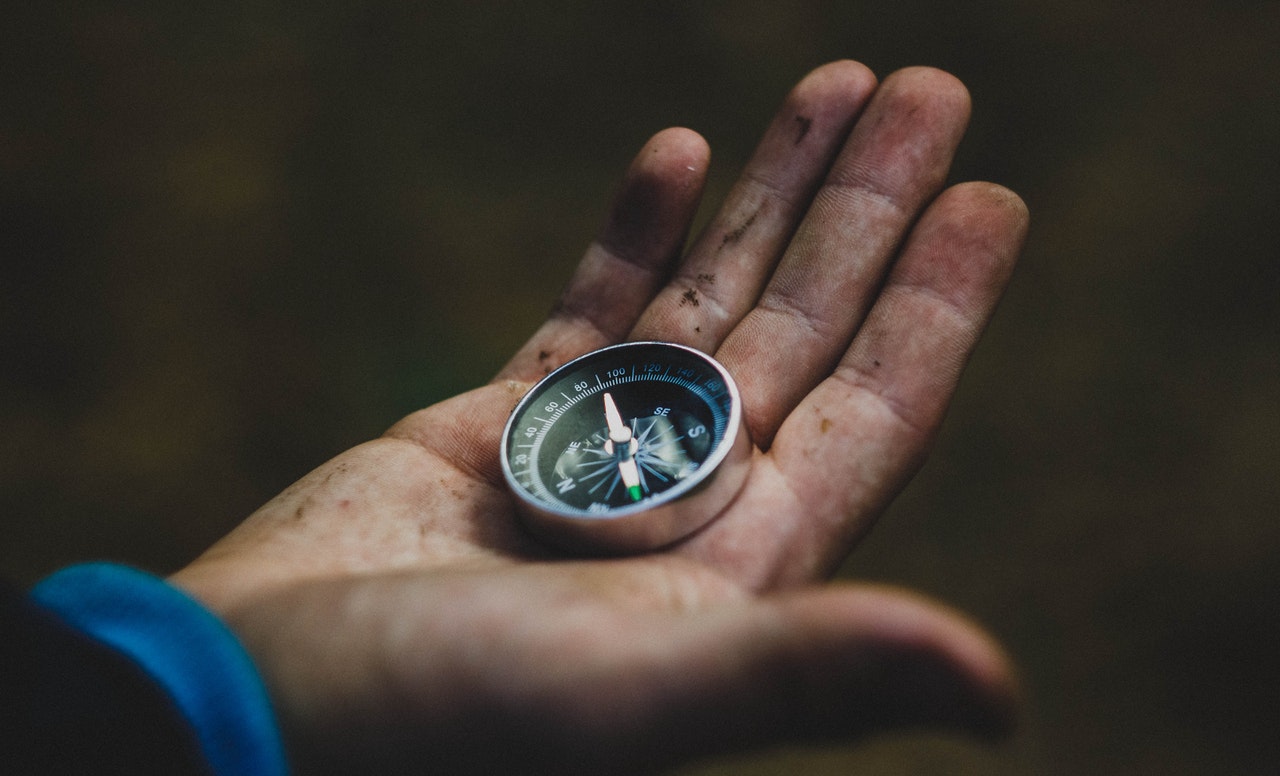
8. They Find the Right Traveling Partners.
The people we surround ourselves with make the difference between failure and success. It’s not only whom we surround ourselves with that matters, but also how we interact with them that make the difference. It is important to avoid people who bring us down, waste our time, take us backward, and have no interest in our suffering. While we cannot always avoid them, at a minimum we can choose to not allow them to weaken us. And sometimes the right companion shows up through chance encounters. In life’s journey there are many encounters. Some are planned; some are by accident; and some by divine intervention. I have had many amazing “Chance Encounters,” where it seems the universe rallied to come to my aid when I needed the help most. They have occurred when least expected — and many of the people I’ve encountered have become friends and family. And whenever those encounters initially left me with a “negative” experience, they turned out to be much-needed lessons for me.
9. They Take the Next Step Forward.
The ability to visualize our dreams creates a mindset that makes our ambitions possible. Understanding exactly what we want is the foundation for our success. But executing that success requires taking the next step, every day, no matter how hard it may be. Author Joseph Marshall III shares Native American wisdom on taking the step in his book Keep Going.
It means letting the tears flow through the grief; it means to keep looking for the answer though the darkness of despair is all around. Each step takes you closer to the top of the hill, closer to the light of the next sunrise, and the promise of a new day. Source: http://www.huffingtonpost.com/faisal-hoque/bend-not-break-9-powerful_b_4719513.html
Most mornings as I leave the Y after my swim and shower, I cross paths with a coterie of toddlers entering with their caregivers for a kid-oriented activity. I can’t resist saying hello, requesting a high-five, and wishing them a fun time. I leave the Y grinning from ear to ear, uplifted not just by my own workout but even more so by my interaction with these darling representatives of the next generation. What a great way to start the day! When I told a fellow swimmer about this experience and mentioned that I was writing a column on the health benefits of positive emotions, she asked, “What do you do about people who are always negative?” She was referring to her parents, whose chronic negativity seems to drag everyone down and make family visits extremely unpleasant. I lived for half a century with a man who suffered from periodic bouts of depression, so I understand how challenging negativism can be. I wish I had known years ago about the work Barbara Fredrickson, a psychologist at the University of North Carolina, has done on fostering positive emotions, in particular her theory that accumulating “micro-moments of positivity,” like my daily interaction with children, can, over time, result in greater overall well-being. The research that Dr. Fredrickson and others have done demonstrates that the extent to which we can generate positive emotions from even everyday activities can determine who flourishes and who doesn’t. More than a sudden bonanza of good fortune, repeated brief moments of positive feelings can provide a buffer against stress and depression and foster both physical and mental health, their studies show. This is not to say that one must always be positive to be healthy and happy. Clearly, there are times and situations that naturally result in negative feelings in the most upbeat of individuals. Worry, sadness, anger and other such “downers” have their place in any normal life. But chronically viewing the glass as half-empty is detrimental both mentally and physically and inhibits one’s ability to bounce back from life’s inevitable stresses.
Negative feelings activate a region of the brain called the amygdala, which is involved in processing fear and anxiety and other emotions. Dr. Richard J. Davidson, a neuroscientist and founder of the Center for Healthy Minds at the University of Wisconsin — Madison, has shown that people in whom the amygdala recovers slowly from a threat are at greater risk for a variety of health problems than those in whom it recovers quickly. Both he and Dr. Fredrickson and their colleagues have demonstrated that the brain is “plastic,” or capable of generating new cells and pathways, and it is possible to train the circuitry in the brain to promote more positive responses. That is, a person can learn to be more positive by practicing certain skills that foster positivity. For example, Dr. Fredrickson’s team found that six weeks of training in a form of meditation focused on compassion and kindness resulted in an increase in positive emotions and social connectedness and improved function of one of the main nerves that helps to control heart rate. The result is a more variable heart rate that, she said in an interview, is associated with objective health benefits like better control of blood glucose, less inflammation and faster recovery from a heart attack. Dr. Davidson’s team showed that as little as two weeks’ training in compassion and kindness meditation generated changes in brain circuitry linked to an increase in positive social behaviors like generosity. “The results suggest that taking time to learn the skills to self-generate positive emotions can help us become healthier, more social, more resilient versions of ourselves,” Dr. Fredrickson reported in the National Institutes of Health monthly newsletter in 2015. In other words, Dr. Davidson said, “well-being can be considered a life skill. If you practice, you can actually get better at it.” By learning and regularly practicing skills that promote positive emotions, you can become a happier and healthier person. Thus, there is hope for people like my friend’s parents should they choose to take steps to develop and reinforce positivity.
In her newest book, “Love 2.0,” Dr. Fredrickson reports that “shared positivity — having two people caught up in the same emotion — may have even a greater impact on health than something positive experienced by oneself.” Consider watching a funny play or movie or TV show with a friend of similar tastes, or sharing good news, a joke or amusing incidents with others. Dr. Fredrickson also teaches “loving-kindness meditation” focused on directing good-hearted wishes to others. This can result in people “feeling more in tune with other people at the end of the day,” she said. Activities Dr. Fredrickson and others endorse to foster positive emotions include: Do good things for other people. In addition to making others happier, this enhances your own positive feelings. It can be something as simple as helping someone carry heavy packages or providing directions for a stranger. Appreciate the world around you. It could be a bird, a tree, a beautiful sunrise or sunset or even an article of clothing someone is wearing. I met a man recently who was reveling in the architectural details of the 19th-century houses in my neighbourhood. Develop and bolster relationships. Building strong social connections with friends or family members enhances feelings of self-worth and, long-term studies have shown, is associated with better health and a longer life. Establish goals that can be accomplished. Perhaps you want to improve your tennis or read more books. But be realistic; a goal that is impractical or too challenging can create unnecessary stress. Learn something new. It can be a sport, a language, an instrument or a game that instills a sense of achievement, self-confidence and resilience. But here, too, be realistic about how long this may take and be sure you have the time needed. Choose to accept yourself, flaws and all. Rather than imperfections and failures, focus on your positive attributes and achievements. The loveliest people I know have none of the external features of loveliness but shine with the internal beauty of caring, compassion and consideration of others. Practice resilience. Rather than let loss, stress, failure or trauma overwhelm you, use them as learning experiences and steppingstones to a better future. Remember the expression: When life hands you a lemon, make lemonade. Practice mindfulness. Ruminating on past problems or future difficulties drains mental resources and steals attention from current pleasures. Let go of things you can’t control and focus on the here-and-now. Consider taking a course in insight meditation. Source: https://www.nytimes.com/2017/04/03/well/live/turning-negative-thinkers-into-positive-ones.html
A new study revealed that the key to thriving, rather than just surviving, could be as simple as feeling good about life and yourself, and being good at something, according to a report by the Science Daily. Daniel Brown, a sport and exercise scientist at the University of Portsmouth, studied all the research on what makes people thrive, from studies of babies and teenagers, to studies of artists, athletes, employees, and the elderly. He found a common denominator. “Thriving is a word most people would be glad to hear themselves described as, but which science hasn’t really managed to consistently classify and describe until now,” he said. Brown added that it appeared to come down to an individual experiencing a sense of development, of getting better at something, and succeeding at mastering something. “In the simplest terms, what underpins it is feeling good about life and yourself and being good at something,” he said. The study established that though thriving is similar to resilience, prospering, or growth, it stands alone. “Since the end of the 20th century, there has been a quest in science to better understand human fulfillment and thriving, there’s been a shift towards wanting to understand how humans can function as highly as possible,” Brown elaborated. Thriving had been examined at different stages of human life and had been described as vitality, learning, mental toughness, focus, or combinations of these and other qualities. In addition, it had been examined in different situations, including in the military, in health, and in child development. He said that part of the reason for a lack of consensus is that the research so far has been narrowly focused. “Some have studied what makes babies thrive, others have examined what makes some employees thrive and others not, and so on. By setting out a clear definition, I hope this helps set a course for future research,” Brown said. The study, published in European Psychologist, included six recommendations for future research, such as the need for close examination of what enables thriving, and whether thriving has any lasting or cumulative effect on individuals. In another study reported by the Science Daily, it was discovered that listening to happy music may help generate more innovative solutions than listening to silence. Although many studies had discovered what promotes creative cognition and had proven the benefits of music to cognition, there is not much research on how listening to music affects creative cognition specifically. (Related: Music Shown to Facilitate the Development of Neurons in the Brain.) The authors examined the effect of music on creative cognition on 155 participants who completed questionnaires and were split into experimental groups. Each group listened to one of four different types of music that were categorized as calm, happy, sad, or anxious, depending on their emotional valence and arousal. On the other hand, one controlled group listened to silence. After the music played, the participants did various cognitive tasks that tested their divergent and convergent creative thinking. The study, published in PLOS ONE, found that listening to happy music facilitated more divergent creative thinking compared to silence. Happy music was described as classical music that is positive valence and high in arousal. The researchers suggested that the variables involved in the happy music condition may enhance flexibility in thinking and future research could explore how different ambient sounds might affect creativity and include participants of different cultures, ages, and levels of music experience. Source: https://www.naturalnews.com/2017-09-17-are-you-thriving-or-surviving-science-reveals-your-mindset-is-key.html
After giving advice recently, I was told, “But I’m not strong like you.” “I don’t know how you survived.” I replied, “You would have been strong, if you had to be,” and I continued, “Sometimes, being strong is the only choice you have.” Until this conversation, I had never given a lot of thought about our capacity to be strong, and I wondered — are we inherently strong, or do we become strong only after being tested through adversity? I believe each of us has an innate capacity for strength and throughout our lives, we develop — through conditions we find ourselves in — the skills to be secure, passionate, formidable and determined. However, when we experience trauma and crisis, some of us lose those skills needed for determination, and in turn lose our capacity to “self-right.” Life is a little like math — we can’t skip algebra, or else geometry and calculus won’t make sense. Likewise, in life we can’t move past trauma, we must go through it, experience it fully, or we simply won’t have the information or the skills necessary to do well. What Are the Traits That Make People Strong?
1. Resiliency:
Resiliency is the ability to adapt to life’s changes and crises. We generally feel safest when we have a sense of control or predictability; but when we find ourselves upside down and not in control, having the capacity to be resilient may be critical in weathering turmoil, and it may be the key to a healthy and productive life. Becoming more resilient means we must be able to be healthy, have energy and cultivate positive feelings during the hardest and darkest of times. When we can improve our problem-solving skills and cultivate the ability to see setbacks as opportunities, we can learn to successfully bounce back from stress, crises, and trauma. We become resilient in order to overcome the many adversities we will face and so that we can bounce back from those problems with more determination and skills, which can lead to better problem solving in the future.
2. Self-Esteem:
Life is filled with moments of bad luck, hardship, sorrow and setbacks. Overcoming adversity teaches us to be strong, survive and even thrive under the challenges of life. Those of us who have lived with and overcome obstacles have learned that there are times that require strong action — and when we step up to meet that need, we learn how to handle new situations, deal with great pain and stay stable and focused. When we face difficulty and disaster head-on and with fearlessness, we strengthen our self-esteem and develop self-confidence. On the other hand, giving in to the hardships — when we do not handle stress, are unable to endure pain, or are unsuccessful and choose to not stand up for ourselves — we are at risk for losing respect for ourselves, and our self-esteem will not thrive in these conditions.
3. Love:
Strength grows when we have people who love us enough to set limits so we stay out of danger, individuals to show us how to do things right and help us when we are in need. When we have role models who show concern and respect, and who help us be responsible for what we do, we begin to expect that things will be all right. There are situations when we find we are stronger for another’s behalf than we would be for ourselves. Mothers who resonate with a child’s internal state will, if needed, put their own safety and survival on hold for the sake of the child. We can learn through attachments and caring that there exists help when we need it the most, and that we are never truly alone — unless we choose to be. Showing our concern for others through devotion, compassion and tenderness supports our ability to find ways to solve problems that we will face, and to develop the skills needed to be strong.
4. Faith:
Faith is, at its core, firm convictions. Convictions are the beliefs that ground us and establish the circumstances in our life — optimism, hopefulness, tolerance and the belief in something. There are many people who don’t know what they really believe in. When you lack convictions, instability can create opportunities for weakness instead of strength. I’m suspicious that it is true: “If you stand for nothing, you will fall for anything.” Regardless of what is happening in your life, take a stand for what you believe in — and when we can stand firm when difficult times arrive and when we can hold it together when everyone would understand if we fell apart, we will develop a powerful strength within.
5. Acceptance:
To accept our strengths, weaknesses and that situations that will not change, is both wise and strong. We all have weaknesses, and when we address them we develop the ability to be tenacious in our resolve to become stronger; and at the same moment, we give ourselves permission to be human. During challenging times, my husband will often give this advice, “Life is like a game of golf — It’s a constant game of recovery because sooner or later you will find yourself in the rough.” Any one of these traits — resiliency, self-esteem, love, faith or acceptance — can help us to become strong and recover from the “rough.” When we dedicate our efforts at developing more than one trait, however, we will see exponentially huge rewards in our life and the lives of those we share. “The weak fall, but the strong will remain and never go under!” — Anne Frank, The Diary of a Young Girl Source: http://www.huffingtonpost.com/linda-durnell/inner-strength_b_2007318.html
Divorce is tough for many reasons. Not only are we dealing with the emotions and logistics and finances, but after the dust has settled, we may feel like our life’s plans have changed direction. The life you planned and your vision of the future may disappear, leaving you with a feeling of not knowing what to do or where to go from here. But when you feel like this, don’t panic! There is merely one thing you must remember:
You May Feel Lost Because Your Internal GPS is No Longer Working
So many of us had our entire lives invested in our marriage and our families. It was the lens with which we viewed the world. Our concept of being a spouse and a partner was our GPS. Whatever decisions we made through our marriage — whether they were personal or professional — were seen within the context of, “Well, is it good for the marriage and is it good for the family? When your marriage ends, that GPS and final destination are thrown out the window. But that doesn’t mean that you are destined to wander around in the dark. We feel like we’re merely surviving and have not yet given ourselves the gift of dreaming again. We are so busy with dealing with the daily roller coaster of emotions and figuring out logistics and finances that we forget to do the one thing we must do. Identifying that vision becomes our new final destination. And until we identify that vision for ourselves and then take the steps to get there, it is impossible to move forward. You can go on auto-pilot and go through the daily motions of life, but it will be very hard to move on and reclaim the happiness you deserve unless you figure out your vision, and have a plan to get there. You must do this for yourself. Need a little help? Here’s an exercise to start on getting rid of your roadblocks. Ask yourself the following questions.
What Do I Want?
If that question seems overwhelming, it doesn’t have to be! Some answers can be as simple as saying, “I want to be happy in my home,” or “I want to feel confident again.”
What is Stopping Me from Getting What I Want?
The things that are stopping us — the obstacles to our vision — are the daily BS things that we face and frustrate us. I want you to list those. Be honest and complete, but don’t spend too much time getting caught up in the obstacles. I know for me, those obstacles included the following:
What’s stopping me?
I am staying in the home although he has left, but I don’t know how to shake the feeling that he is still “here.” There are pictures of us together, some of his books are here, and I feel like everything just seems frozen in time.
What’s stopping me?
I didn’t feel great when we were having marital troubles, but now that I’m alone, I feel like my self-esteem is completely gone. I feel like I don’t have any purpose and it’s awful. How do I rebuild? Once you have a few of those obstacles in mind, the fun part begins. You are going to learn how to kick those obstacles out of the way by coming up with an easy plan that erases them and gets you closer to your destination.
Start Overcoming Those Obstacles by Writing Down What You Plan to Do
You don’t need some crazy battle plan. It doesn’t need to be a PhD dissertation. All you need are some simple steps that you can start taking today. If you need some help, look at the quick plans I created for myself when I felt lost after my divorce.
Life After Divorce: An Obstacles-Be-Gone Plan
I am not feeling great about myself right now. There are several things I can do to change that. If I am not already seeing a therapist, or one that I really like, I will start searching and asking for recommendations to find someone who can work through this process with me. I am also doing to do things for myself for a change. I am going to list things that I like to do – hobbies, physical activities — and will put them on a calendar so I remain accountable and committed to doing the things that I love. It’s time to put myself first.
The Road Ahead
Following this plan means you have done two awesome things for yourself. First, you now have something that sticks — something you can use to help boot out those silly roadblocks that are up in your face. And second, you now know where you want to be. You have the vision of knowing what you want. You have identified your final destination. When you know your final destination and the steps to get there, nothing can stop you.
Many parents worry their divorce will negatively effect their children. However, one psychologist says divorce can have a positive impact on kids.
Your parents, a best friend, perhaps even yourself—most Canadians have had some experience with divorce. In 2008, Statistics Canada estimated that 41 percent of Canadian marriages would end in divorce before their 30th wedding anniversaries. Despite this forecast, the actual number of divorces in Canada declined between 2007 and 2008—the most recent years studied by Statistics Canada—but the heartbreak that accompanies a divorce is still very real for many Canadian children. Thankfully, not all kids grow up to carry scars from their parents' split. Here are five positive life lessons children can learn following a divorce.
1. They become resilient and adaptable
For Gabrielle Domingues, a Toronto media specialist and married mother of two, her parents' divorce taught her how to roll with life's changes. "Divorce made me more adaptable to varying lifestyle situations," she says. "My dad lived in a different city for years, so I was more attuned to having more than one resting place with different people and things. That's a useful skill to have." Dr. Lisa Ferrari, a Vancouver-based clinical psychologist, says Gabrielle's hunch is bang on. "A natural byproduct of going through divorce is that you are required to be more adaptive," she says. "You're in a situation where you have to develop coping strategies to deal with physical and psychological space transitions." Often, children of divorce grow up having to develop coping strategies that their non-divorce counterparts wouldn't encounter until years later, if at all. "Having to overcome these obstacles and having to deal with change makes some children of divorce more resilient in life," says Dr. Ferrari.
2. They become more self-sufficient
Tara Richmond, a married mother to a six-year-old son and a marketing and media consultant in Collingwood, ON, found that her parents' divorce made her more confident in her own abilities. "Having a mother working full time after my parents' split taught me how to be more self-sufficient," she says. "I went home after school by myself and often started dinner. At age 11, I was doing laundry, and small grocery shops. I really relished my time alone at home. I got to know myself." The new economic challenges that come with having a single-parent income often result in the child becoming more responsible for household chores. "It's logical that divorce offspring would view themselves as more self-sufficient, and see this strength as a positive outcome of their parents' divorce," says Dr. Ferrari.
3. They develop an increased sense of empathy toward others
A change in the family unit can make some children more sympathetic to the problems of others. "I think I am more accepting of people, their situations and circumstances," says Tara. "My parents were the first of my friends or family to get a divorce. It was 1980, so there was still a stigma." Dr. Ferrari says that she sees this caring trait in the kids of divorce who frequent her practice. "When their peers have family problems, it's very relatable for them," she says. "I find that they can be quite empathetic."
4. The idea of marriage isn't taken for granted
"Coming from divorced parents, I have a heightened understanding to the stakes [in marriage], which hopefully makes me a more conscientious spouse," says Gabrielle. I feel a certain pride that my marriage is strong and happy when my parents' wasn't, like I'm succeeding where they didn't." "I'm not surprised that's something Gabrielle's proud of," says Dr. Ferrari. "Even at a young age, kids want to create something different after they've experienced the hurt that comes from the separation of their parents. They say that they're going to do this better than their parents, or not do it at all. Gabrielle's doing it, and she's changing her history."
5. They learn more through quality time spent with each parent
Not all kids of divorce spend less time with their parents. "I got to know my parents on a different level by spending so much time with them individually," says Tara. "I think my relationship with each of them became closer and we learned a lot about each other." Like Tara, the kids in Dr. Ferrari's practice often mention this plus. "The biggest positive I hear from the kids and see first hand is that they spend more time with dad, especially if their family structure was more traditional [pre-divorce]," she says. "When the parents move into a shared role, the kids find they get more time with their fathers." While it's more common for a child, or adult, to recount negatives from their parents' divorce, Dr. Ferrari says that the legal community is adopting changes that suit the children's best interests. Hopefully, these adjustments will facilitate more positive outcomes. "We're moving towards alternate dispute resolution processes such as mediation, so parents can go through divorce without involving court," she says. "Engaging in co-parenting therapy lets mom and dad commit to parenting the kids the same way, despite no longer being married to one another. These changes are positive for kids."
Are you waiting for life events to turn out the way you want so that you can feel more positive about your life? Do you find yourself having pre-conditions to your sense of well-being, thinking that certain things must happen for you to be happier? Do you think there is no way that your life stresses can make you anything other than “stressed out” and that other people just don’t understand? If your answer is “yes” to any of these questions, you might find yourself lingering in the land of negativity for too long! The following are some tips to keep positive no matter what comes your way. This post will help you stop looking for what psychologists call “positivity” in all the wrong places! Here are the ten essential habits of positive people.
1. Positive people don’t confuse quitting with letting go.
Instead of hanging on to ideas, beliefs, and even people that are no longer healthy for them, they trust their judgement to let go of negative forces in their lives. Especially in terms of relationships, they subscribe to The Relationship Prayer which goes:
I will grant myself the ability to trust the healthy people in my life …
To set limits with, or let go of, the negative ones …
And to have the wisdom to know the DIFFERENCE!
2. Positive people don’t just have a good day – they make a good day.
Waiting, hoping and wishing seldom have a place in the vocabulary of positive individuals. Rather, they use strong words that are pro-activeand not reactive. Passivity leads to a lack of involvement, while positive people get very involved in constructing their lives. They work to make changes to feel better in tough times rather than wish their feelings away.
3. For the positive person, the past stays in the past.
Good and bad memories alike stay where they belong – in the past where they happened. They don’t spend much time pining for the good ol’ daysbecause they are too busy making new memories now. The negative pulls from the past are used not for self-flagellation or unproductive regret, but rather productive regret where they use lessons learned as stepping stones towards a better future.
4. Show me a positive person and I can show you a grateful person.
The most positive people are the most grateful people. They do not focus on the potholes of their lives. They focus on the pot of gold that awaits them every day, with new smells, sights, feelings and experiences. They see life as a treasure chest full of wonder.
5. Rather than being stuck in their limitations, positive people are energized by their possibilities.
Optimistic people focus on what they can do, not what they can’t do. They are not fooled to think that there is a perfect solution to every problem, and are confident that there are many solutions and possibilities. They are not afraid to attempt new solutions to old problems, rather than spin their wheels expecting things to be differentthis time. They refuse to be like Charlie Brown expecting that this timeLucy will not pull the football from him!
6. Positive people do not let their fears interfere with their lives!
Positive people have observed that those who are defined and pulled back by their fears never really truly live a full life. While proceeding with appropriate caution, they do not let fear keep them from trying new things. They realize that even failures are necessary steps for a successful life. They have confidence that they can get back up when they are knocked down by life events or their own mistakes, due to a strong belief in their personal resilience.
7. Positive people smile a lot!
When you feel positive on the inside it is like you are smiling from within, and these smiles are contagious. Furthermore, the more others are with positive people, the more they tend to smile too! They see the lightness in life, and have a sense of humor even when it is about themselves. Positive people have a high degree of self-respect, but refuse to take themselves too seriously!
8. People who are positive are great communicators.
They realize that assertive, confident communication is the only way to connect with others in everyday life. They avoid judgmental, angry interchanges, and do not let someone else’s blow up give them a reason to react in kind. Rather, they express themselves with tact and finesse. They also refuse to be non-assertive and let people push them around.They refuse to own problems that belong to someone else.
9. Positive people realize that if you live long enough, there are times for great pain and sadness.
One of the most common misperceptions about positive people is that to be positive, you must always be happy. This can not be further from the truth. Anyone who has any depth at all is certainly not happy all the time. Being sad, angry, disappointed are all essential emotions in life. How else would you ever develop empathy for others if you lived a life of denial and shallow emotions? Positive people do not run from the gamut of emotions, and accept that part of the healing process is to allow themselves to experience all types of feelings, not only the happy ones. A positive person always holds the hope that there is light at the end of the darkness.
10. Positive person are empowered people – they refuse to blame others and are not victims in life.
Positive people seek the help and support of others who are supportive and safe.They limit interactions with those who are toxic in any manner, even if it comes to legal action and physical estrangement such as in the case of abuse. They have identified their own basic human rights, and they respect themselves too much to play the part of a victim. There is no place for holding grudges with a positive mindset. Forgiveness helps positive people become better, not bitter. How about you? How many habits of positive people do you personally find in yourself? If you lack even a few of these 10 essential habits, you might find that the expected treasure at the end of the rainbow was not all that it was cracked up to be. How could it — if you keep on bringing a negative attitude around?
Those who are known for getting things done, for committing and then executing, even in times of adversity or hardship can become known for having a lot of willpower
You can read a recent article I wrote on this very subject at http://bit.ly/2UQcE9o
In the episode I'll share my thoughts on how I believe willpower on its own is often not enough. If we're committing to do something or to get through something that is challenging or testing, if we require willpower then it's often an indication that we're not really committed to the decision, and we don't believe in ourselves strongly enough. I'll share the 4 things that I believe are essential to minimise our dependency on having to rely on willpower, and how these can be evidenced in our life, and built upon.
Have you ever heard the following joke, “Well enough about me...let’s talk about you. So... what do you think about me?” This article is all about YOU. Dedicate the next seven days to your inner and outer self. Use the following questions to determine, “What about me?”
Do I eat a minimum of three well-balanced meals daily?
Do I hydrate enough so that my urine is clear?
Do I get a minimum of seven hours of deep sleep each night?
Do I think and/or talk to myself with positive affirmations?
Do I avoid harmful over-indulgences?
Do I choose friends that make me mentally, physically and spiritually better?
Do I swiftly manage the stress in my life?
Do I only go into the past for non-emotional evaluation or to reminisce in a positive way with a friend?
Do I only go into the future for planning my Visions and Goals with corresponding tactics and strategies?
Do I do what I love and love what I do?
Do I only think of what I want, as opposed to what I don’t want in life?
Do I prioritize a daily, weekly, monthly, quarterly and yearly to-do list?
Do I take periodic breaks, mini-vacations and full vacations to rejuvenate my mind, body and soul?
Do I adhere to the Golden Rule of “So whatever you wish that others would do to you, do also to them”
Do I treat myself like a Champion?
If the answer is “No” to any of these questions, then make it right. Create an action plan, if necessary. Commit to it. See yourself doing it in finished state. If the answer is “yes,” then congratulations! You are on the right path. Place this short questionnaire in safekeeping. Use it periodically to see if you’re treating your best friend, YOU, like a champion. With strains of the economy and the demands of society increasing, it is time to place your awareness on YOU. For over 40 years, most of my clients that initially arrived to my doorstep had put themselves last. They had placed their “happy eggs” in baskets of Career, Relationships or Parenting, neglecting the very thing that makes everything possible.
How do you become your best friend?
Love yourself and it will be easier to showcase love for others and find reciprocating love. Respect yourself and you’ll gain respect from others. Speak positive to yourself and positive people and opportunities will arrive. Avoid self-deprecating humor. Avoid phrases like...
“I figured that would happen.”
“If I didn’t have any bad luck, I wouldn’t have any luck at all.”
“I’m an idiot!” or “I suck at...”
“I’m too old for this.”
“Life’s an endless grind.”
“I told you that wouldn’t work.”
“That’s just the way it goes.”
“You can’t expect to succeed all of the time.”
“You win some and you lose some.”
“There’s not enough time in the day.”
“If I had better direction, I would perform better.”
“Why try? It’s not appreciated. It does me no good.”
“I’m just going to do my job and keep my mouth shut.”
Have you uttered any of the above phrases? No more put downs or beating yourself up, especially in front of others. No more victim and or judge thoughts or statements.
End negative self-talk
If your daily inner dialogue could be printed out, it would reveal if you are your best friend or not. I’ve told many clients, “If I talked to you like you talk to you, you’d fire me.” Sell you on you. As your self-worth increases, a magnetic force of attraction will expand. Most of the things you need and want in life will arrive. It’s time to “Be Your Own Best Friend.” Source: http://www.huffingtonpost.com/jim-fannin/be-your-own-best-friend_1_b_13050648.html?utm_hp_ref=emotional-wellness
When you're married, you rely on your spouse to handle various things. Perhaps he cooks, and you do the dishes. Or you clean, and he takes out the trash. Maybe you set the budget, and she makes the travel arrangements. Or she takes the memorable pictures, and you organize them into albums. You divide and conquer based on your strengths and weaknesses. After you split, it can take a while to renegotiate with yourself from a division of labor to doing most of it yourself.
In my case, once my husband and I split, after being together for over a decade, I had to learn not to rely on my ex. My first post-split major moment of personal empowerment was harsh and abrupt, involving a hive full of wasps. I was getting the house ready for what would be my last barbecue in our marital home. I discovered that a wasp's nest had formed inside the grill. I ran into the house and called my husband for help. Our divorce wasn’t final yet, I had no idea what to do, and I certainly didn't want to deal with the wasps by myself. My husband, the man who had been around to take care of these things for years, responded calmly, and I felt, coldly. He sat at his desk at work, and said to me over the phone, "If we were still together, I would run home and take care of this for you. But since you are my estranged wife, you need to deal with this on your own. I suggest you light the grill with the top down and run until it’s all over." I hung up the phone, furious. How could he leave me hanging with a grill full of wasps? I was still the mother of his child! We’d been married for more than a decade! I fumed for a while. Then, without a husband around, or an alternate person present to address the problem, I marched over to the grill and . . . did exactly what he told me to. I turned on the gas, hit the ignition switch, slammed the lid down, and ran back into the house. From the safety of my kitchen window, I saw some of the wasps fleeing the now-burning nest. (I felt a bit of empathy for the wasps living in my grill; my own home was about to be taken over, and I was scrambling to find a new place while minimizing the transition for my son.) As the minutes passed, my initial anger faded, and was replaced with new-found confidence. I’d managed to take on a wasp nest all alone, and uninjured—who knew what other powers lay hidden inside?
Ten minutes later, I returned to the scene of the crime and opened the grill. The wasps were all gone, along with all my fury. I stood there feeling nothing but pride. I had handled a scary situation without my husband! Later, my mother there as a witness, I proceeded to tell all the guests about this dangerous mission. We had a good laugh over it. I also managed the grilling all by myself for the first time ever. Somehow that combination of killing the wasps and grilling the food myself made me realize that everything going forward would work out okay.
A few weeks later, the moving truck came and moved everything to my new apartment, 10 miles north. Rather than feeling sad about leaving my marital home, I found myself excited to start a new chapter in my life.
I never again asked my ex-husband for help, unless it related to our son. I also think the Great Wasp Incineration prepared for the next radical change that occurred after the house was sold; my communication with my ex dwindled to once a month, limited to child-related scheduling and expenses. There were no longer pleasantries, nor disparaging digs. Our relationship became mostly business, even during the face-to-face child exchanges when my son was little, and especially once he remarried and started a new family. I somehow didn't miss our former, closer relationship as much as I would have expected, in part because I realized I now had to rely on myself—and then came to prefer that. This new independence became a real catalyst to expand my network of friends, and move on.
Since my divorce, I have had to kill several hives of wasps and take on other previously unimaginable tasks by myself: I bought a home, as a single woman. I bought a new car, without a spouse or partner coming along. I’ve managed various moves and even family deaths. I’ve traveled internationally alone with my son. I’ve made major work and life decisions—all without a partner. This was not at all how I envisioned my life, and yet in some ways, my accomplishments over this past decade have been much sweeter because I can fully attribute them to my own efforts.
Many of my divorced clients and friends have confessed experiencing a similar evolution—initially they were angry about having to face something alone, but later, after completing the task by themselves, they felt a great surge of pride. It could be something as silly as fixing the toilet alone, or driving themselves around town after having relied on a spouse to be a personal chauffeur for years. Dealing with a move or planning a vacation all by yourself is a big deal when you have not had to do this ever, or in a very long time. Of course, we all have the power to do these things, but when you’re married, the cozy warmth of partnership itself can bring this unfortunate corollary—you can lose sight of just how strong and independent you can be. Source: http://www.splitopia.com/main/learning-to-rely-on-myself-post-divorce-and-loving-it
Much of the scientific research on resilience — our ability to bounce back from adversity — has focused on how to build resilience in children. But what about the grown-ups? While resilience is an essential skill for healthy childhood development, science shows that adults also can take steps to boost resilience in middle age, which is often the time we need it most. Midlife can bring all kinds of stressors, including divorce, the death of a parent, career setbacks and retirement worries, yet many of us don’t build the coping skills we need to meet these challenges. The good news is that some of the qualities of middle age — a better ability to regulate emotions, perspective gained from life experiences and concern for future generations — may give older people an advantage over the young when it comes to developing resilience, said Adam Grant, a management and psychology professor at the Wharton School of the University of Pennsylvania. “There is a naturally learnable set of behaviors that contribute to resilience,” said Dr. Grant, who, with Sheryl Sandberg, the chief operating officer of Facebook, wrote the book “Option B: Facing Adversity, Building Resilience and Finding Joy.” “Those are the behaviors that we gravitate to more and more as we age.”
Scientists who study stress and resilience say it’s important to think of resilience as an emotional muscle that can be strengthened at any time. While it’s useful to build up resilience before a big or small crisis hits, there still are active steps you can take during and after a crisis to speed your emotional recovery. Last year Dr. Dennis Charney, a resilience researcher and dean of the Icahn School of Medicine at Mount Sinai in New York City, was leaving a deli when he was shot by a disgruntled former employee. Dr. Charney spent five days in intensive care and faced a challenging recovery.
“After 25 years of studying resilience, I had to be resilient myself,” said Dr. Charney, co-author of the book “Resilience: The Science of Mastering Life’s Greatest Challenges.” “It’s good to be prepared for it, but it’s not too late once you’ve been traumatized to build the capability to move forward in a resilient way.” Here are some of the ways you can build your resilience in middle age.
■ Practice Optimism. Optimism is part genetic, part learned. So if you were born into a family of Eeyores, you can still find your inner Tigger. Optimism doesn’t mean ignoring the reality of a dire situation. After a job loss, for instance, many people may feel defeated and think, “I’ll never recover from this.” An optimist would acknowledge the challenge in a more hopeful way, saying, “This is going to be difficult, but it’s a chance to rethink my life goals and find work that truly makes me happy.” While it sounds trivial, thinking positive thoughts and surrounding yourself with positive people really does help. Dr. Steven Southwick, a psychiatry professor at Yale Medical School and Dr. Charney’s co-author, notes that optimism, like pessimism, can be infectious. His advice: “Hang out with optimistic people.”
■ Rewrite Your Story. When Dr. Charney was recovering from the shooting, he knew that his life was forever changed, but he reframed the situation, focusing on the opportunity the setback presented. “Once you are a trauma victim it stays with you,” he said. “But I knew I could be a role model. I have thousands of students watching my recovery. This gives me a chance to utilize what I’ve learned.” Study after study has shown that we can benefit from reframing the personal narrative that shapes our view of the world and ourselves. In expressive writing studies, college students taught to reframe their college struggles as a growth opportunity got better grades and were less likely to drop out. A Harvard study found that people who viewed stress as a way to fuel better performance did better on tests and managed their stress better physiologically than those taught to ignore stress. “It’s about learning to recognize the explanatory story you tend to use in your life,” Dr. Southwick said. “Observe what you are saying to yourself and question it. It’s not easy. It takes practice.”
■ Don’t Personalize It. We have a tendency to blame ourselves for life’s setbacks and to ruminate about what we should have done differently. In the moment, a difficult situation feels as if it will never end. To bolster your resilience, remind yourself that even if you made a mistake, a number of factors most likely contributed to the problem and shift your focus to the next steps you should take. “Telling yourself that a situation is not personal, pervasive or permanent can be extremely useful,” Dr. Grant said. “There is almost no failure that is totally personal.”
■ Remember Your Comebacks. When times are tough, we often remind ourselves that other people — like war refugees or a friend with cancer — have it worse. While that may be true, you will get a bigger resilience boost by reminding yourself of the challenges you personally have overcome. “It’s easier to relate to your former self than someone in another country,” said Dr. Grant. “Look back and say, ‘I’ve gone through something worse in the past. This is not the most horrible thing I have ever faced or will ever face. I know I can deal with it.’”
Sallie Krawcheck, a former Wall Street executive, said that after a very public firing, she reminded herself how fortunate she still was to have a healthy family and a financial cushion. While she has never studied resilience, she believes early challenges — like being bullied in middle school (“It was brutal,” she said) and going through a painful divorce — helped her bounce back in her career as well. “I just believe in comebacks,” said Ms. Krawcheck, who recently founded Ellevest, an online investment platform for women. “I see these setbacks as part of a journey and not a career-ending failure. There was nothing they could do to me on Wall Street that was as bad as seventh grade.”
■ Support Others. Resilience studies show that people are more resilient when they have strong support networks of friends and family to help them cope with a crisis. But you can get an even bigger resilience boost by giving support. In a 2017 study of psychological resilience among American military veterans, higher levels of gratitude, altruism and a sense of purpose predicted resiliency. “Any way you can reach out and help other people is a way of moving outside of yourself, and this is an important way to enhance your own strength,” said Dr. Southwick. “Part of resilience is taking responsibility for your life, and for creating a life that you consider meaningful and purposeful. It doesn’t have to be a big mission — it could be your family. As long as what you’re involved in has meaning to you, that can push you through all sorts of adversity.”
■ Take Stress Breaks. Times of manageable stress present an opportunity to build your resilience. “You have to change the way you look at stress,” said Jack Groppel, co-founder of the Johnson & Johnson Human Performance Institute, which recently began offering a course on resilience. “You have to invite stress into your life. A human being needs stress; the body and the mind want stress.” The key, Dr. Groppel said, is to recognize that you will never eliminate stress from your life. Instead create regular opportunities for the body to recover from stress — just as you would rest your muscles between weight lifting repetitions. Taking a walk break, spending five minutes to meditate or having lunch with a good friend are ways to give your mind and body a break from stress. “Stress is the stimulus for growth, and recovery is when the growth occurs,” said Dr. Groppel. “That’s how we build the resilience muscle.”
■ Go Out of Your Comfort Zone. Resilience doesn’t just come from negative experience. You can build your resilience by putting yourself in challenging situations. Dr. Groppel is planning to climb Mount Kilimanjaro with his son. Take an adventure vacation. Run a triathlon. Share your secret poetry skills with strangers at a poetry slam. “There is a biology to this,” said Dr. Charney. “Your stress hormone systems will become less responsive to stress so you can handle stress better. Live your life in a way that you get the skills that enable you to handle stress.” Source: https://www.nytimes.com/2017/07/25/well/mind/how-to-boost-resilience-in-midlife.html