
Showing posts with label Behaviour. Show all posts
Showing posts with label Behaviour. Show all posts
Friday, 30 October 2020
Managing life’s opportunities as a working mother | Stephanie Herseth Sa...
There's a real challenge about taking the opportunities that you can as a single working parent, just the same as for any working parent.

Friday, 28 August 2020
Social networking linked to divorce, marital unhappiness

In what may be of little surprise to avid readers of FacebookCheating.com, a new study found a correlation between social media use and divorce rates in the United States.
The study, published in the journal Computers in Human Behavior by researchers from Pontificia Universidad Católica de Chile and Boston University, compared state-by-state divorce rates to per-capita Facebook accounts. In a separate analysis, they also used data from a 2011-2012 survey that asked individuals about marriage quality and social media use.
Their study found a link between social media use and decreased marriage quality in every model they analyzed. They said their research did not prove that social media might be to blame for troubled marriages, but suggested such a link may be proven in subsequent studies.
"Although it may seem surprising that a Facebook profile, a relatively small factor compared to other drivers of human behavior, could have a significant statistical relationship with divorce rates and marital satisfaction, it nonetheless seems to be the case," the authors wrote.
The state analyses found that a 20 percent annual increase in Facebook enrollment was associated with anywhere from a 2.18 percent to a 4.32 percent increase in divorce rates depending on the model used. Similarly, the model from individual survey results predicts that someone who does not use social media is over 11 percent happier in his or her marriage than a heavy social media user.
The study did not attempt to establish any causal relationship between Facebook and negative marital outcomes, but the authors did offer several explanations for why the correlation exists.
The study's authors reasoned that individuals in problematic relationships may be turning to social media for a support system, thus explaining the link between their increased usage and marital problems. They also wrote that social networks may help reduce uncertainty for people going through a divorce by providing information on an ex-partner without forcing direct contact.
The authors also hypothesized that social media's addictive qualities may create marital strife, promote an environment rife with opportunities for jealousy and may help facilitate extra-marital affairs.
Source: http://www.cnbc.com/2014/07/08/social-networking-linked-to-divorce-marital-unhappiness.html
Saturday, 30 May 2020
The 18 Best Things You Can Do For Your Kids After Divorce

Raising your kids after divorce isn’t easy. You constantly worry about how the split will affect them in the long run — and let’s face it, interacting with your ex in the name of co-parenting isn’t always a walk in the park.
Still, if you strive to put your kids first, divorce can absolutely be an opportunity to be a better parent than you were before your marriage ended. Last week, we asked our Twitter and Facebook followers to share with us what they believe is the best thing you can do for your kids after divorce.
See 18 of our favorite responses below.
1. “Don’t talk badly about the other parent. Modeling good behavior by getting along with your ex is really critical to the kids’ stability.
2. “Be consistent in everything you do. Be dependable, reliable and make them laugh. Often.”
3. “Remember this: Genetically, your kids are 50 percent your ex. Every negative thing you say about him or her, you’re saying about the kids, too.”
4. “Be honest with your kids in an age-appropriate way.”
5. “This is a good time to be a smotherer. Smother them with love and support and remind them that the divorce has nothing to do with them and that ultimately, it will be for the best.”
6. “Get a therapist for the kids during the divorce, not after. We did so and my kids really benefitted from having someone removed from the situation to talk to about their feelings. She encouraged them to open up and helped us sidestep a lot of serious issues.”
7. “Act like adults.”
8. “Understand that some situations don’t lend themselves to co-parenting. Consider alternatives like parallel parenting. Just because you’re divorced doesn’t mean that your spouse has changed.”
9. “Allow your kids equal time with both parents. They deserve it.”
10. “Don’t blindly follow advice from books on post-divorce parenting. The best way to comfort your kids is to go off what you’re sensing from them, not what some self-help author told you to do.”
11. “Be empathetic about the grief they are experiencing. Encourage them to talk and don’t judge their feelings.”
12. “Put their needs first, even before your own. Everything you do should be done in their best interest and nothing you do should be done without asking how your choices will affect them.”
13. “Try your hardest to co-parent. Be there for your ex so you two can support your kids as a team. It’s no longer about the adults so put any animosity aside and do what is in the best interest of your children.”
14. “Realize how futile it is to trash-talk your ex sooner rather than later. The kids will determine the merits and minuses of each parent on their own.”
15. “If you’re allowing the kids to choose who they live with, don’t make them feel guilty about their choice.”
16. “Keep in mind: They’re the innocent victims in the situation. Treat them accordingly.”
17. “Never use your kids as a weapon, a go-between or a spy against your ex. And never talk negatively about the other parent near them or anywhere they can hear or see it (hint hint: Facebook).”
18. “Love your kids more than you hate your ex.“
Source: http://www.huffingtonpost.com/2015/02/17/parenting-after-divorce-advice_n_6679462.html
Friday, 29 May 2020
How Solo Single Moms Can Raise Confident, Healthy Sons

The notion that any dad is better than no dad is nonsense.
Parenting solo is a tough challenge, no doubt.However, psychologists agree that boys do not require constant male guidance to grow up confident and healthy. In fact, a dad living at home who is a poor role model typically does more harm than good. If a biological dad is unfailingly neglectful, physically or emotionally abusive or just plain unloving, his son is most likely better off without his dad’s influence.
So what can a single mother raising a boy alone do to ensure her son gets what he needs? For starters, trust that your beliefs and actions will guide you toward success.
Here are some other tips to keep in mind:
Adjust your attitude, if necessary. Strive to resolve your issues about men and relationships, especially if you became a single mom under excruciating circumstances – like if your son’s father left without warning or explanation. When you look at your son and see his biological dad’s face, it’s OK to get a little emotional. After all, if your ex gave you anything of value, you’re looking at him. Tell your son early and often how much you love him no matter how you feel about his biological dad.
Banish any “man of the house” notions about your son. Your goal is to guide your son toward manhood. Right now, however, your son cannot assume responsibility for things adult men are supposed to do. Your son is not your confidant, knight in shining armor or rescuer. Correct privately and quickly any adult who asks your son if he’s taking good care of Mommy or wrongly confers “man of the house” responsibilities on him.
Your son’s only job right now is to be a kid.
Set limits early. Sons of single moms are not at greater risk for getting into serious trouble as adults. Don’t believe the dire predictions you may hear. Believe in yourself as a strong and confident parent.
Focus on your son and his needs. As parents, our only realistic option is to control our own behavior.
Boys do act differently than girls. Dealing effectively with bursts of typical boy behavior, such as pushing and shoving on the playground, are simply a part of your everyday parenting responsibilities.
Teach your son your values. But let him express these values uniquely. Point out positive qualities in men you see on a day-to-day basis. Emphasize the importance of treating others with kindness, as well as being helpful and considerate. Discuss examples of bullying in age-appropriate ways. Point out why such behaviors are contrary to your family values and simply wrong.
Make it clear what’s appropriate behavior in your home. Of course, hitting, punching and kicking are against family rules. Discuss alternatives to unwanted behavior so that your son can make more appropriate choices next time. These will not be one-time conversations.
Spanking may work for the moment, but it sends the powerful message that acting out your feelings is acceptable, if you’re the one in charge.
Stress using words rather than actions to convey feelings. Model this behavior by using words to describe your own feelings, rather than slamming the car door or stomping angrily around the house. Make sure your son understands that it’s not OK to shut people out. Let your son cry openly with no discouragement or judgment.
Keep talking. As your son grows older, challenges increase because adolescent boys fear revealing their confusion and vulnerability. Our culture still admires “real men” who fear weakness and strive to solve problems on their own. This is why solo single moms – who don’t have another parent to partner with in raising kids – are often advised to leave their sons alone or let them shoot some hoops. We’re assured that he’ll be fine and urged not to hover.
Resist the impulse to shrug your shoulders and walk away. This is exactly the time to let your son know that you’re always available for conversation. Talking openly – sharing kid-friendly details - about what goes on in your own life makes your son more inclined to say what’s on his mind rather than silently sulk.
Source: http://health.usnews.com/wellness/for-parents/articles/2017-03-21/how-solo-single-moms-can-raise-confident-healthy-sons
Monday, 20 January 2020
Surviving Divorce: David Sbarra at TEDxTucson 2012
Really like the metaphor for forks in the road as decision points in life post-divorce.
Tuesday, 8 October 2019
How to avoid relationship mistakes when dating after a divorce
Does the idea of dating after divorce arouse the same dread as does a root canal? Are you trying to get back into the dating scene but don’t know how or are scared that you will attract the wrong person? Well, have no fear. Here is some after divorce dating advice to help you jump back into the dating deepend before you know it!


Do
Do understand why your last relationship failed
Following divorce, it’s only natural to have cold feet when it comes to finding a new flame. Whether conscious of it or not, divorce leaves most people scared of getting burned again. And there’s good reason for fear. What’s to say you won’t make the same mistakes again? If you want to prevent your next relationship from going down in flames, it’s vital to understand the reasons why your last relationship went up in smoke. With clarity comes the courage to jump again into the dating pool -- and attract your true Mr. or Ms. right this time around.
Do take notice of your repetitive mate selection patterns
Most of us have been emotionally injured during our “de-formative years.” It is these old scars from childhood that drive us to choose partners who emotionally resemble the parents who injured us so that we can recreate our old scars; not because we’re gluttons for punishment--but because we secretly hope to achieve a happy ending this time around. If our partners bring us the emotional goodies that we didn’t receive from our parents, our old scars will finally feel healed.
Sadly, this plan rarely works, precisely because our partners are limited and damaged in the exact ways that our parents were--meaning they can’t give us any better treatment than our parents did. Awareness of our old scars enables us to make a more conscious choice this time around, and head-off unnecessary heartache.
Do choose a partner who will give you your happy ending
After identifying your old scar, your next task is to become conscious of what your happy ending is. Hint: Your happy ending is the kind of treatment that you always dreamed of receiving from the parent who let you down. Your quest for this happy ending is your blueprint for your next relationship. So, for example, if you had a father who paid no attention to you, look for a partner who is present and attentive to you. The bottom line: This time around you want to choose a partner who will feed rather than frustrate your deepest needs.
Do interview candidates and be highly selective
The only way to determine if someone is right for you is to do your homework. Dating homework consists of asking lots of questions and observing your intended’s actions over time. With both eyes open, you want to be looking for a partner who is similar to you in all the areas that count, including financial, sexual, political and religious values. The more similar you both are, the more compatible you are. And, above all, you want to ensure that the person isn’t like the parent (or your ex) who let you down. Doing your due diligence is the key to preventing a repeat performance of the heartache that you experienced in your first family and in your relationship with your ex.
Do be authentic
Thirty-five percent of all new marriages are the result of online dating. But, with online dating, it’s easy to present a false mask. A study conducted by researchers at the University of Wisconsin-Madison and Cornell University found that 80 percent of online daters lie about their age, height, and weight. So be careful! Don’t take another person’s profile at face value. Keep one eyebrow raised until you can verify the other person’s honesty. And, when it comes to presenting yourself, remember: If you paint a false picture of yourself, you’re painting yourself into a corner! And you can’t undo lies and omissions.
Besides, the more authentic you are the better your chances of attracting the right partner for you. The idea is to give a snapshot of your personality, tastes, and interests without oversharing. So you probably don’t want to talk about your recurring IBS, but you do want to offer pertinent details that will help potential partners know who you are and what you’re into.
Don't
Do not choose a partner who hates his/her mother or father
If your date is like most of the world, he/she may be looking to replay unfinished business with a parent using you as the emotional punching bag. Your bottom line is this: If someone has an ax to grind with his/her parents, run for the hills, because it won’t be long before that ax swings in your direction.
Do not choose a partner who’s a project
When you find yourself drawn to someone who’s damaged goods, that’s your warning sign that you’re on the verge of repeating old scars. Trying to fix damaged partners is an unconscious attempt to fix our parents in the hope of achieving our happy ending. If this is your case, step back from dating until your old scar is healed. Then and only then will you be ready to find a healthy relationship rather than a partner who’s a project. Remember: The way to spell heartache? Choose a partner who’s a project!
Do not delay meeting in person
If you’re new to the dating scene, or you’ve been burned and are recovering from a messy breakup or divorce, you probably won’t feel comfortable rushing an in-person meeting. But beware: Anonymous, faceless conversations play a trick on your mind, allowing you to develop an intimacy without really knowing the other person. In other words, that guy or lady becomes a blank screen you can project your fantasies onto—enabling that person to become anyone you want. Keep that going too long, and you may fall in love with a phantom. Be wary of prolonged email exchanges and never-ending phone calls and meet in person asap.
Do not choose a person who refuses to take ownership
When “interviewing” dates as candidates for a possible relationship, listen carefully to what your date says about past failed relationships. If that person blames everything on the ex and takes no responsibility for his/her role in the demise of past relationships, grab your marbles and go home! Otherwise, you will soon be losing your marbles when you find yourself on the receiving end of that person’s blame.
Do not settle
After a breakup or divorce, our self-esteems can be lower than pond scum. In this state, we don’t feel desirable, which can make us come across as desperate and needy. When our self-esteems are flying at half mast, we are at risk of settling for someone who isn’t right for us or even attracting a dating deadbeat. So, before reentering the dating scene, make sure to raise your personal net worth and you will raise the odds of attracting your Mr. or Ms. Right!
Summary
Reentering the dating scene is a wonderful opportunity to set yourself free from the childhood emotional demons that haunt our adult relationships. The key to freedom is consciousness: Know your old scars and consciously choose a partner who will bring you healing rather than heartache.
Monday, 23 September 2019
The phenomenon of divorce regret

There is a tiny chapel perched in the meadow above Judge's Bay, in Parnell. White and wooden, it's the perfect setting for a romantic summer wedding.
A 10-minute drive from there, crouching low over the wind-tunnel of Albert St, is the Auckland District Court. Above the entrance, a large patch of mould is creeping down the facade to meet the New Zealand Coat of Arms.
Of the 10,000 or so couples who marry in New Zealand yearly, roughly a third will eventually end up filing the papers here, on level 6, to dissolve their marriage.
Divorce has never been easier and, for marriages where abuse or genuine incompatibility is at play, shooting the horse can be the best option. But for others it's not so straightforward: according to several British studies, upwards of 33 per cent of those who divorce will regret their decision within five years.
Google "divorce regret" and you will find the internet is littered with those regretting their decision to end it. Whisper, the app where people anonymously share secrets, logs confessions from people wishing to turn back the clock, side by side with those happy to be moving on.
William Michael, a Wellington man now in his 50s, is in the former category. He and his wife divorced nine years ago, after seven years of marriage and two children.
He found that the intimacy of marriage unearthed flaws in him that hadn't been triggered by the less intense bonds of friendship and work relationships.
"I tend to withdraw when I'm facing difficult issues," he says. "It's hard to deal with that behaviour because it's largely unconscious."
He worked hard to change his flaws but found it challenging. "At a certain level we don't want to learn to change them," he says. "They're part of our sense of who we are."
Immediately after they split, he felt happy - the break-up had relieved the pressure. But later the truth seeped in. "There was a reason we were together, there was a way we complemented each other. There was something I should have done, which I didn't do."
He urges people in a similar position to learn from his experience. "In one lifetime you just don't have that many deep relationships," he says. "And to lose one ... so if you think there's something fundamentally right, do all you can to look at your own processes, who you are, the way you do things."
Clinical psychologist Trish Purnell-Webb, founder of the Relationship Institute Australasia, says most of her divorced clients have to resolve their regret. Mostly regrets take the form of "Why didn't I make more of an effort?" and "Why couldn't I see how great they were?"
She estimates 90 per cent of the couples she sees could happily go on to have a successful relationship, providing they up-skill to overcome their individual and joint weaknesses. The other 10 per cent have genuinely made a mistake in their choice of partner.
But even in marriages that are fundamentally sound, when things get tough, as they inevitably do, a proportion of people choose the quick death and perceived fresh start of divorce, rather than hanging in there for the hard slog of overcoming difficulties.
The human brain is hard-wired to identify and focus on the negatives in the surrounding environment. It's a survival strategy: being aware of threats helps us avoid hurt and injury. It can, however, lead us to seriously underestimate the positives until it's too late.
"It's easy to focus on the dirty socks in the middle of the lounge floor, rather than appreciate the bunch of flowers on the dining room table," Purnell-Webb says. "It's once those flowers are removed that we begin to miss them."
Regret can be very hard to let go of, and it delivers the double blow of shackling a person to the past, while diminishing their appreciation of the present. Left unresolved, it can lead to depression and anxiety.
So what helps? Research shows starting a new relationship is the leading factor in moving on from the regret associated with divorce. Being a woman helps too: statistically women tend to fare better because they are more likely to have better support networks, whereas men tend to pin their emotional and psychological resources on their partner.
The New Zealand "just get on with it" ethos also plays its part in isolating people dealing with uncomfortable emotions like regret. Rather than sucking it up and boxing on, it's more helpful to focus on developing the thinking skills and mental toughness to let go of the fantasised "other life".
For those who have genuinely made a mistake and for whom divorce is the best option, there is almost invariably still regret, but it takes a different form.
Simone Ellen, a brand strategist who split from her ex-husband five years ago, is sure she made the right decision. But looking back, she wishes that during their 11-year marriage she had ditched her flaw of being a people-pleaser, and fought harder to be herself. Instead she spent much of it conforming to rules she didn't believe in - making a thousand small concessions she lost herself in.
She also regrets not being kinder to herself in the first year after the split. "I just did bravado instead of recognising how much I hurt."
For her there was a silver lining in the trauma of the divorce: it forced her to take a long look at how she operates in relationships. "We're savvy at blame," she says, "to keep our pride intact. Courage is the game changer - it takes courage to take responsibility."
Dr Nickola Overall, associate professor of psychology at the University of Auckland, agrees regret can motivate self-examination. "Why do we have to figure out who we are if everything's fine?" she says.
We've never expected more from marriage. It's an institution that started life as a strategic alliance between families, and has morphed into - ideally - a legally binding love relationship between equals. The job of the modern spouse includes being emotionally available, loyal and supportive, as well as helping the other's dreams come true, and encouraging them to become all they can be.
These high expectations coincide with the point, historically, when we are the most time poor we've ever been. The demands of children, work, and modern life lower the chances of converting these expectations into reality. Overall says it's a cocktail for disaster that can spell the end, even for sound marriages.
One Hamilton woman, now in her 50s, says this was the case in her former marriage. They allowed, she says, the chaos of having a young family to swamp, and eventually capsize, their marriage. "That joy you have on seeing your partner come home is lost to desperately needing them to be home so they can share the load," she says. "While there's great happiness in having a family, it's a lot of pressure on a relationship."
Their marriage drifted, and in the end her husband made a stupid mistake - seeing another woman. It would be easy to blame him for their eventual divorce, but she is adamant that's not the case. "Blame is completely out of line because you're just as responsible," she says. "You both got to that point. If you honestly look back at the previous time, you can see cracks."
They tried marriage guidance, but she had already checked out, even before his adultery. "You leave it until everything's about to break."
Divorced more than a decade, she says, "I regret not hanging in. I have lain awake, years after, in the middle of the night, woken up thinking, 'Oh my God.'"
Sir Paul Coleridge, a retired family law judge in London, has seen exactly this scenario play out many times. He spent 42 years in the family law system, 30 as a barrister and the remaining 12 as a judge, divorcing couples. He was so frustrated by witnessing what he felt were many unnecessary divorces, that he founded a think-tank, the Marriage Foundation, in 2012. While the family court provides a remedy for the problem, the foundation is his attempt to address its cause.
Most divorce is concentrated in the first 10 years of marriage, when the stress of young families, hectic lives and money pressures can be overwhelming. He says more than half of the divorce cases he heard were salvageable, despite reaching litigation. They hadn't hit the point of no return, things had just got much tougher than they would like.
If the marriage is sound, the way through, he says, is for spouses to confront the aspects of themselves and their marriage that they would rather ignore, and address those difficulties head-on.
Overall agrees that spending time on your marriage, making it strong and stable, insulates it against the inevitable down times.
She says one block to facing and resolving difficulties is the phenomenon of "destiny beliefs", where a person believes their relationship was "meant to be". Romantic, yes, but it can destabilise a marriage because, hand in hand with the belief that the relationship is destined, goes the belief that it should be easy and conflict-free.
Overall says people with these beliefs respond more negatively to conflict. Rather than working to resolve it, the presence of the conflict prompts them to question the "rightness" of the relationship. They're more likely to break up marriages, says Overall, and are more likely to find themselves in a state of regret afterwards.
The key is understanding that conflict is a normal part of marriage. "Even anger and hostility can have a positive effect," she says, "because if traversed well, conflict can be a catalyst for improvement, and both personal and relationship satisfaction."
HOW TO AVOID DIVORCE
Dr John Gottman of the Gottman Institute in the United States, says that more than any other relationship factor, divorce can be predicted by the presence of the "Four Horsemen of the Apocalypse": criticism, contempt, defensiveness and stonewalling (withdrawal). The answer, he says, is to replace them with better skills. So what does that look like? His 40 years of research have identified nine skills that will lead those horses back to the stables for good:
1. Know your partner's world. Understand your partner's psychological world, history, worries, stresses, joys and hopes.
2. Give out love and admiration. Practise showing your partner appreciation and respect.
3. Respond openly to your partner. Reward your partner's attempts to connect with you, however flawed, with listening and encouragement. Reciprocate by voicing your own needs.
4. Positive perspective. Have a positive, can-do approach to problem-solving.
5. Manage conflict. Conflict is natural, and can be functional and positive. Learn the difference between solvable and perpetual problems, which need to be handled differently, and use the right tool for the job.
6. Help make life dreams happen. Encourage each person to talk honestly about their hopes, values, convictions and aspirations.
7. Create shared meaning. Find a common purpose by finding shared values, goals, life philosophies and ways of connecting.
8. Trust. Treat your partner like they have your back.
9. Commitment. Believe, and act on the belief, that this is your lifelong partner. Compare your partner favourably with others.
Source: http://www.nzherald.co.nz/lifestyle/news/article.cfm?c_id=6&objectid=11679476
Thursday, 5 September 2019
Positive Outcomes of Divorce
Imagine that you’re preparing your husband’s favorite meal. He walks through the door at dinnertime and you greet him. Suddenly, and without any provocation at all, his mood changes. It’s as if a dark cloud has come over the room. Your mind starts racing back, you wonder what did you say, what did you do? This scenario plays out over and over again in some marriages and can diminish self-esteem, wear down emotional resource, and kill your soul.

Or maybe you’ve hit a wall in your marriage. You’ve been here several times before with your spouse, and you both feel at wits’ end. When marriages are untenable and there is nowhere else to go, in order to save your emotional and sometimes physical life, as well as secure the mental health and wellbeing of your children, sometimes the only place to go is “out.”
It is at this moment, when you decide to change your life, to advocate yourself and your children, that a visit to a counselor, psychiatrist or psychologist is warranted.
Positive Outcome of Divorce #1: Self-Reflection and Self-Healing
With professional guidance you can discover what affected your choice of a mate and assure yourself that you will never make that mistake again. This self-reflection and self-healing is one of the most positive outcomes of divorce. By doing inner work, you can recognize and acknowledge your own patterns that led you to a dysfunctional relationship in the first place. Then, if you can integrate back into your psyche those early patterns from your family of origin, you can redeem them and never have to repeat them again.
At this time of greatest trauma, your defenses are cracked open, and for the first time in a long time you are your natural self. This is the undefended healthy core of your existence, and it is from this place of your natural resource that you can heal, renew and experience rebirth. By experiencing your authentic self, you will automatically build your self-esteem, depression will lift, and you are able to move into a happier and healthier lifestyle.
When you first fall in love, you may project onto the beloved your ideal: the best of who you are, those rose-colored glasses of your imagination. This is what we call a projection. However, by suppressing who you really are — by going along to get along — you are using up vital energy just to hold down your feelings.
You will still be compelled to move towards those old patterns that worked for you within your original family. However, because you are now conscious and aware, you will see red flags everywhere, and you have the opportunity, therefore, to override those impulses that compel you to move towards the wrong relationship and as a result make room for the right one. In essence, you’re changing a habit, and as you grow and break your old habits, you allow yourself the opportunity to experience a different relationship with a new spouse. It’s important to remember that we are different with different people.
This is restoration, how you bring yourself back to your full potential — the you that you were meant to be. A healthy partner is the one who carries the positive characteristics of our opposite sex parent, and that’s when second marriages can become fulfilling and mutual. Even your physical health can be restored.
Positive Outcome #2: Better Health
Now we know that telomeres, the little rings around your chromosomes that fall off as you age, also fall off when you are stressed. Miraculously, they can be restored through healthy lifestyle changes. Therefore, by releasing yourself from an unhealthy partnership, you not only can become healthier mentally and physically, but also add years to your life through happiness.
Positive Outcome #3: Self-Confidence and Empowerment
The first feeling you experience at the onset of divorce can be fear of the unknown. However, by moving into your fullest capacity, the real you, as I describe above, this will automatically rebuild your self-esteem, your sense of self, your capacity for intimacy, your creative energy and allow you to take back the power you surrendered in a poor relationship. In my work as a researcher, educator and human behavior expert, I’ve witnessed that poor marriages are often based on possessiveness, lack of intimacy, need for space and distance and need for control.
Positive Outcome #4: Giving Your Children the Gift of Modeling Healthy Relationships
Finally, as difficult as the process of divorce can be on your children, it also allows them to watch you make human mistakes — and then grow from them. As you do your inner work and regain your true self, your children are watching, and they can learn the importance of valuing yourself. They also have the opportunity to learn how to properly behave and react should they find themselves in a similar situation down the road. And finally in the future, you can model, for your children, a true and healthy marriage.
The best relationships come out of strength, not weakness. When you are whole and know yourself, you will meet someone with whom you can be mutual. This is a marriage born of strength, not of lack. Once the negative and critical patterns of poor partnerships are released, you can expand into the undefended you. By rediscovering yourself, that inner you that you were before marriage, following your own rhythm of sleeping, being, staying home and going out, you act on your own behalf and by so doing find your own authority is empowered. This returns a sense of control, allowing you to grieve the past and embrace the future.
Source: http://www.huffingtonpost.com/dr-gail-gross/positive-outcomes-of-divo_b_4768426.htmlThursday, 22 August 2019
Motivational Tips: Life Tips after Divorce
Mental Health: 10 Tips to Get your Life in Order and Regain Control after the Divorce

I sometimes have restless nights where I can’t seem to get my mind off everything I’m faced with. Often I’m thinking about my next move in this world. How about you? When your marriage ends, thiscan happena lot. Divorce, and coping with it, has a way of mkaing your mind wander in these directions.
After such a night not too long ago I went for a walk along the Grand Traverse Bay (one of my favorite spots) to shake off my grogginess and fretfulness. Walking east, the morning light cast an amber haze on gentle ripples easing their way to shore. I spied two sandpipers flitting in the sand, and a few sea gulls feasting on something that had washed up on the beach. A couple of minutes later, from behind the large breakwater surrounding the marina, came a powerboat disrupting the baby ripples, forcing more aggressive waves toward me.
I made it over to the space next to the harbor house and looked north to the water’s edge, continuing the conversations in my head from the middle of the night, as well as trying to figure out what on earth I was going to write about for this column when I got back to my computer.Just as I started to head for home I caught sight of a mama duck and her babies making their way to the beach. Ten baby ducklings, all in a row. I said to myself, “They seem to know where they’re going and they’re doing it with purpose and precision. Why can’t I seem to get it together like that?”
Then I wondered: What would be the ten things I’d need to do more of to get me closer to my dreams and a more settled life? After pondering it for a short while I came up with the following list, in no particular order (and all subject to change) that I intend to work on:
10 TIPS FOR LIFE
1. Get healthy, and lose weight, so I’ll look and feel better about myself.
2. Clean out my closets, literally and figuratively. This applies to anything or anyone weighing me down.
3. Tackle those things I tend to procrastinate over, taking them one step at a time so as to not feel so overwhelmed.
4. Stop feeling the need to take care of EVERYONE all of the time, and start caring more about my own needs.
5. Spend more time doing what I truly love to do (which is almost always tied to our purpose in life).
6. Take the time to learn something new every day.
7. Find something to be grateful for every single day.
8. Work on my relationships, especially the ones I find the most difficult (gee, where do I start?).
9. Catch myself every time I use negative self-talk, and think more positively.
10. Meditate.
When the issues of divorce are surrounding us, it’s really easy for everything to feel like one big jumbled mess. Taking the time to create a list of things we find important to our well-being (both inner and outer), and then actually acting on them, can help us feel more in control, more together. What 10 ducks are you going to compile?
Friday, 29 March 2019
Is Your Ex Behaving Badly? It’s A Loaded Question

I usually offer a sad smile when someone says, “I’m going through a really bad divorce.” I mean, is there any other kind? No. Getting divorced is no picnic. It’s a war, in many cases, and you feel like you are trying to come to agreements with someone who has become a complete stranger to you.
It’s kind of bizarre if you think about it. You once stood in a wedding dress with this person, did the whole romantic first wedding dance, had babies with him, and now, you just can’t stand each other, and all you want is to be as far away as possible from this person.
One thing that happens in almost every divorce is that because both people are so hurt and angry and bitter and sad and scared, they behave badly at times. I call it “bad divorce behavior.” In some divorces, it is a one time incident, in others, bad divorce behavior is perpetual and can go on years after the divorce is finalized.
What do I mean by bad divorce behavior? I’m talking about things like: one of the people flaunting their new boyfriend/girlfriend to hurt the spouse or make him or her jealous, not paying child support on time to aggravate the spouse, or badmouthing and brainwashing the kids against the soon-to-be-ex.
Bad divorce behavior is done with the intention of hurting the other person in some way, again because the person has all this pent up hurt, frustration, fear, anger, resentment, or a combination of two or more of these things.
Bad divorce behavior has consequences. First, it can slow down a divorce process, meaning the couple must spend more time and money before the divorce is final. Secondly, being petty and mean-spirited just makes everything worse. So, if you think you are hurting your spouse, you might be, but you are also hurting your ability to find peace, to heal, to move on. Lastly, bad divorce behavior also hurts innocent children. They are the true victims. If you hold the child support check back, who are you really hurting? But because of their intense pain, many people don’t realize or care, which is really really sad.
Here are 3 examples of bad divorce behavior—appalling divorce behavior, actually:
1. A Summer vacation good-bye kiss and hug denied. I know a couple who has been divorced for a few years. They have a very strict parenting schedule because that’s what the wife wants. She is never willing to bend the schedule, even if it means her ex missing out on seeing his kids because he is traveling. The wife was recently taking their three children on a summer vacation for a week. The ex-husband asked her if he could swing by the morning they were leaving and just give the kids a kiss and hug good-bye. He was planning on bringing them some treats from Starbucks for the car ride. The ex-wife adamantly refused and said, “You said good-bye to them last night. Why do you have to do it again?”
Here is my stance. issue. I think that the reason for this woman’s pettiness is that she clearly has underlying anger and resentment issues towards her ex that she hasn’t worked out. Secondly, if she asked herself, “Would the kids like this?” (which is a question every parent should ask when weighing a decision like this) and she answered herself “yes,” then she should have let him come over. She didn’t think of her kids, she thought of her own vengeance and satisfaction of hurting her ex (again.) Pitiful. Very very bad divorce behavior.
2. Ex and his fiancé mail wedding invitation for his kids to his ex’s house. This is a disgusting display of trying to twist the knife in the ex-wife’s back as hard as possible. Do people have that much hate that they would stoop to this level to try to hurt the ex? Apparently the ex has his own place, where the kids go frequently, so why not mail it there? Because the two bitter, angry, mean-spirited people wanted the ex-wife to suffer and feel sad and lonely. My take is that they are miserable, unhappy people. Why? Because happy people don’t want to hurt others like this. The fiancé is actually worse than the ex-husband. Why would SHE want to hurt the woman?? Ugh. Pathetic!
3. Ex husband tries to plant drugs and frame his ex-wife in attempt to get full custody. So basically, the guy hates his ex-wife so much that he wants to get her out of the pictureand take her away from his children. So, his hate for his ex exceeds the love he has for his children because he is attempting to take their mother away. Their mother. This is a very sick person. If any judge found out about this, he would be the one losing custody.
Anyone reading this is surely thinking, “I’ve got one…” meaning an example of bad divorce behavior. Why? Because some form of bad behavior is present in almost every divorce situation. I am guilty of it myself. I am not going to say I never behaved badly during my divorce and even after (although not to the extent of these three examples). My point is, I’m not preaching because I’ve been there.
But I think the key in avoiding bad divorce behavior is recognizing it. If you want to do something hurtful or vengeful to your ex, ask yourself two things: “Why am I doing it?” and “What am I trying to gain from this?” Sure, maybe it would feel good for a few minutes, and you could get that satisfaction of feeling justice, (like, “he really deserved that”) but what happens after? A, your kids might suffer. And B, I just think it leaves a person with a yucky feeling. No one wants to be the bad guy.
As far as being the victim of bad divorce behavior, remember two things: one, you cannot control what your ex is doing, so don’t try. Accept that you cannot change him or her. Two, take the high road. It is ALWAYS the best road, no matter what. Instead, lean on the Lord, friends, your kids, your family and your loved ones. Also, lean on yourself. You’d be surprised how much strength and courage you have that you don’t even realize. And in the end, the high road leads to happy, beautiful, successful places. And maybe, you might see that it overlooks the valley where vindictive people who implement bad divorce behavior end up as a result of their own bad choices.
Source: http://www.huffingtonpost.com/entry/is-your-ex-behaving-badly-its-a-loaded-question_us_59636ddce4b0cf3c8e8d5a23
Tuesday, 8 May 2018
5 Ways to Find Meaning in Life Following Adversity

Bad news can shake our beliefs. Here are 5 tips to get back on track.
We are meaning-makers. We like things to make sense. We believe in religions that provide an account for why the world is the way it is. We pursue goals that fit our conceptions of ourselves in the world. We even prefer things that “make sense” to things that don’t: for example, a marker set with a single pen of each color, as opposed to a set with an extra red pen (i.e., the set on the left as opposed to the set on the right— even though the one on the right has more pens total).
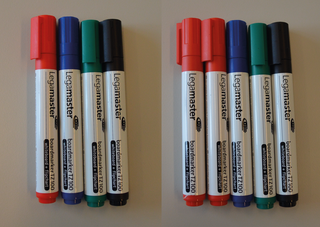
Source: Sarah Cotterill
But what happens when things don’t make sense? When one’s sense of meaning in life is jeopardized after, for example, a traumatic or unexpected event? After a mass shooting, or the death of a loved one, or a life-threatening diagnosis?
When meaning is already there—when the world already seems to make sense—there is no need to use our cognitive resources to search for it. But when meaning doesn’t come to us effortlessly, we use effort to find it.
Traumatic events trigger a more deliberate search for meaning precisely because they often don’t fit with one’s existing views of the world or one’s sense of self in the world.
And psychologists have known for many decades now that people find the experience of dissonance—when things don’t fit together in our minds—distressing. For example, we don’t like it when our attitudes aren't aligned with our behaviors (e.g., “french fries are bad for me, but I still eat them”)—to the point that we typically either change our attitudes (e.g., “I read somewhere that the potato has gotten a bad rap”), or our behaviors (e.g., quit eating french fries altogether).
The same is true for events that shake our worldviews—it can be frightening and uncomfortable to think that the world maybe isn’t as we envisioned it. And the literature points to a few strategies we use (consciously or unconsciously) to resolve those discrepancies—to make that discomfort go away.
Here are five examples:
1. First, we often reconstrue the meaning of the event so as to fit into our existing worldviews—what is called assimilation.
For example, in the aftermath of his cancer diagnosis, Jimmy Carter, a devoutly religious man, has publicly relied on his faith to help him make sense of his illness—what he calls his “latest adventure in life.” And a fellow member of his church congregation said this about his cancer: “When you get into a tough situation and you don’t know what God’s plan is, you should bow the knee.”
The critical part here is that cancer did not cause Carter nor his friends to revise their faith- in fact, it seems to have deepened it. They are hoping to understand how cancer fits into the plan for his life.
2. We also often change our worldviews to take into account the event—what is called accommodation.
We might conclude, for example, that while there is much good around us, the world is not as predictable as we might like to believe. That does not mean we have to adopt a pessimistic mindset. Rather, simply acknowledging that there is good and bad in the world might mean that when the bad does crop up it doesn't generate quite the same dissonance. (Incidentally, we also know that aspects of the brain respond more strongly to surprise than to the actual amount of “badness” wrapped up in any given event: the bad event you, to some extent, expect does not feel as unpleasant as the same event that you don’t see coming).
3. We engage in what’s called social comparison—reminding ourselves that, in certain respects, we might still be better off than many people in the world. Jimmy Carter also said, following his diagnosis, “I’ve lived a very good life.” In doing so, he seems to imply that there are others who have been less fortunate to this point—both a "prosocial" sentiment, and one that perhaps allowed him to feel more at peace with his own diagnosis.
4. We even engage in comparisons with ourselves. We might emphasize the fact that we’ve dodged outcomes even worse than the one’s we’ve been dealt—for example, cancers that could have been caught at later stages, or accidents that could have been more serious.
5. We often "reappraise" the event: we might search for silver linings—to see if we can find any good that has come out of a bad thing. For example, it is common to hear people (including myself) say that a certain traumatic event allowed them to become closer with their friends and family.
Through these processes, we often restore—and sometimes even enhance—our sense of meaning in life.
Oliver Sacks, on learning of his own cancer diagnosis, wrote in the New York Times, “Over the last few days, I have been able to see my life as from a great altitude, as a sort of landscape, and with a deepening sense of the connection of all its parts. This does not mean I am finished with life. On the contrary, I feel intensely alive, and I want and hope in the time that remains to deepen my friendships, to say farewell to those I love, to write more, to travel if I have the strength, to achieve new levels of understanding and insight.”
The idea that enhanced well-being can come from trauma is taken up in the literature on what’s called post-traumatic growth—and will be the topic of a later post! Source: https://www.psychologytoday.com/us/blog/the-science-adversity/201606/5-ways-find-meaning-in-life-following-adversity
--
Heintzelman, S.J., King, L.A. Meaning in life and intuition. Journal of Personality and Social Psychology, 110(3), 477-92.
Chater, N., & Loewenstein, G. (2016). The under-appreciated drive for sense-making. Journal of Economic Behavior & Organization, 126, 137-154.
Karlsson, N., Loewenstein, G., McCafferty, J., 2004. The economics of meaning. Nordic Journal of Political Economy, 30(1), 61–75.
Festinger, L. (1962). A theory of cognitive dissonance (Vol. 2). Stanford University Press.
Saturday, 14 April 2018
How divorce and separation affect your child

If their parents are having relationship problems or going through a separation, bad behaviour can be kickstarted in children of all ages. But you can head off tantrums, aggression and backchat if you work as a team, despite your differences, and reach a compromise when it comes to discipline
Discipline issues are all too common when parents are having relationship problems. Battling with your child piles on additional stress when you least need it, but it’s important to try see things from your child’s point of view. They're going through the trauma of seeing their family break up – and it can lead to profound insecurity that manifests itself in aggression, mood swings and backchat.
The trouble is, if parents let their own bitterness get in the way of compromise when it comes to raising their kids, it can make things even worse. Here's our advice for keeping your kids on track during and after your break-up by working together as a parenting team.
Understand where your kids are coming from...
Try to understand your child’s feelings about separation or divorce. They're likely to feel insecure, believing that if you’ve stopped loving each other, you might stop loving them, too. It’s common for younger kids to believe they’re somehow to blame for their parents splitting up, and to feel scared that they may have to choose between their parents, or feel abandoned by the parent who moves out. Bad behaviour, anger and aggression are often a cry for help: your child wants to know that both of you still love them and that you won’t leave them too.
...but don’t excuse bad behaviour
Don't excuse your child's bad behaviour because you feel guilty about the break-up, and think that letting them get away with it will somehow make them feel better. Giving in will chip away at your authority and may turn a minor discipline dilemma into a major discipline disaster.
Accept each other’s different approaches…
A lot of parents use a ‘good cop/bad cop’ system of discipline. It might work well when you’re part of the same family unit but once you split up what will probably happen is that ‘good cop’ parent becomes Fun Mum or Fun Dad and lets the kids break all the rules; while ‘bad cop’ parent (usually the one with custody) has to become even stricter in order to stay organised and in control. It can be very difficult to change your fundamental parenting style, so sit down together and try to compromise by accepting that you just don’t discipline in the same way, and let the trivial things go when the kids are at Dad’s house.
…but resolve your discipline differences
No matter what has happened in your relationship, it’s vital to present a united front to your children – if you don’t you risk them playing you off each other. Try to rise above any anger or bitterness and don’t criticise the way your ex does things or deliberately break the discipline rules just to get even – you’ll just end up confusing your kids.
Make your expectations clear to the kids
Draw up a list of house rules and have a copy pinned up in each home to end any confusion your child may have over different rules for different houses. It’s important to be seen to be supporting each other, so make it clear that there will be a clear and consistent approach to discipline in both households and that if your child loses privileges because of bad behaviour the other parent will follow through at their house.
Source: https://www.supernanny.co.uk/Advice/-/Family-Matters/-/Relationships/Divorce-and-discipline-~-how-to-stop-matters-getting-out-of-hand.aspx
Saturday, 17 February 2018
How To Stop Settling And Have A Great Life After Divorce

In order to surround yourself with what you love you have to stop settling for what you don’t.
One of the realizations you’ve probably had as you’ve been healing from your divorce is that you learned to accept less than you wanted during your marriage.
Obviously, you accepted less honest communication, less meaningful connection and less unconditional love than you wanted and deserved or else you’d still be married. But in the name of compromise (or keeping the peace) you also accepted other things that you didn’t really want or like: the nagging, the yelling, the strained relationship with your in-laws, or even the color of your bedroom.
So here’s the great news. Now you can stop settling! But not just on the things that you settled for for the sake of your marriage. Now you can stop settling for everything. You can create your life after divorce full of things, relationships, behaviors and experiences that you love.
However, before you can fully create a life you love you need to learn how to stop settling.
Whenever you ignore your preferences and choose something just because it’s what’s available now and not because you love it, you’re settling. Whenever you do something because it’s easy and not because it’s what you really want to do, you’re settling. Whenever you accept someone’s poor behavior without saying something about it, you’re settling.
It’s important to recognize what settling is because it’s an insidious habit. It’s easy to put your preferences or feelings to the side for the sake of someone else. And why do you do that? So those other people can have what they want!
Well, it’s time for you to have what you want out of life. Since no one is going to just hand it to you on a silver platter, it’s time for you to stop settling and create the great life after divorce that you deserve.
When you stop to think about it, settling feels bad. You feel diminished and less than the person you’re allowing to have their way. If it goes on too long, you wind up feeling victimized and unworthy of what you really want out of life.
Now that you know how settling feels and what its impact is in your life, you can begin to eliminate settling from your life.
Start by taking a good look at your possessions. Are there things you need to purge because you feel bad just looking at them or you feel bad when you use them? Those are the things you’ve allowed into your life that you don’t really want. Those are the things you’re settling for.
But don’t think you have to purge or replace all of that stuff at the same time. You can do it in phases (and as your budget allows). Maybe you’ll start by getting rid of all the pens you have that don’t write well. Maybe you’ll start by throwing out all the underwear that you’d never want someone else to see you in.
The important thing here isn’t how quickly you eliminate all the things you’ve been settling for, but that you begin purging them and have a plan for how to replace (or live without) all of them.
After you’ve cut your teeth with getting rid of the things that you’ve settled for, you can start looking at how you’re settling in other areas of your life. Some of the other areas for you to consider are your relationships, your behaviors and habits as well as your job.
What you’ll quickly discover as you eliminate more and more of the things, relationships, behaviors, and experiences you’ll feel lighter. Your world will seem happier and more comforting because you’re only surrounding yourself with people, places, things and experiences that you want. And THAT will guarantee that your life after divorce is way better than it was before you divorced.
Source: https://drkarenfinn.com/divorce-blog/life-after-divorce/357-how-to-stop-settling-and-have-a-great-life-after-divorce
Wednesday, 26 July 2017
Fighting parents might be more harmful to child development than divorce, study suggests

Researchers at the University of York say children of divorcees are around 30 per cent more likely to have behaviour or emotional issues because of the arguing at home they have witnessed.
The research was based on data from 19,000 children born in the UK in 2000 and looked at 'non-cognitive' skills such as behaviour, emotional issues and interaction with peers.
The findings were presented at the Royal Economic Society's annual conference in Bristol.
The study also found that children of divorce perform about 20 per cent lower for cognitive skills. This gap is largely down to parents' education and finances, the study suggested.
Divorced parents
Gloria Moroni, from the Department of Economics and Related Studies, said: "The main result of my research is that the fact that children of divorced parents have on average lower cognitive and non-cognitive skills compared with children of intact families is not necessarily due to divorce itself.
"Most of the damage is given by pre-divorce circumstances and characteristics of the family.
"For example, parents who decide to divorce may also be lower-educated, may also be poorer, or they may have more conflictual relationships.
Cognitive gaps
She added: "The most interesting thing is that when comparing cognitive and non-cognitive skills, what we find is that cognitive gaps are mainly driven by the fact that parents who decide to divorce are also for example, less educated and have lower financial resources."But on the other hand, the non-cognitive gaps are mostly driven by the fact that parents who divorce have more conflictual relationships."
Dr Moroni said that the results suggest that interventions that encourage parents to co-operate, or that make them aware of the negative impact of conflicts on children, could help to close these non-cognitive gaps.
Source: https://medicalxpress.com/news/2017-04-parents-child-divorce.html#jCp
Subscribe to:
Posts (Atom)