Infidelity, separation, divorce—they can tear you apart. You might doubt whether you can fall in love again. In hopes it’ll help you, I’ll share what I learned after my marriage fell apart. Though I’m not a relationship expert, experience can be the best teacher. I had been married for 32 years and was hurt to the marrow of my bones when my husband left me. How in the world would I ever have another relationship? I knew I wanted one, but the daunting task of finding the right person scared me to death. Here are five things that worked for me when I began dating after divorce:
1. Get out in the dating world again when you’re ready.
How do you know you’re ready? If you’re still feeling extremely hurt (crying in the grocery store) or angry (throwing your laptop across the room), or otherwise not through your grieving process, you’re not ready. But if you feel like you’re moving on, you’ve regained your independence, you are happy by yourself… then take the leap. Even if you don’t date, at least get out socially – go to a concert, sporting event, art exhibit, whatever interests you. Enjoy yourself and increase your chances of meeting someone with like interests. Going alone will give you a sense of confidence, but if you’re the kind of person who can’t go solo, then recruit some friends to go with you. I bravely made myself attend a poetry reading alone when my husband and I were separated. I even took off my wedding ring, though I felt naked. Guess what? I ended up sitting with a couple of people who’d been in a class with me, and I also met new poet friends. It made me feel good about myself again – knowing I didn’t have to be part of a couple. In fact, I am still part of that poetry community. At one point, I looked around an online dating site. My heart was actually beating hard with the possibilities, like a teenager wondering who’d take me to the prom. I saw a few profiles of interesting men. But then I freaked out, not able to imagine actually going on a date. That told me I wasn’t ready. A year or so later, after I had lived alone and knew I was fine by myself, I started dating someone I’d met through friends. I was ready; I wasn’t needy or on the rebound. I’ll admit: Dating after being married for 32 years was weird. It was fun, too, because I was ready.
2. Catch yourself when you're comparing.
You’re naturally going to compare your new man or woman to your ex. You’ll want to run away from anyone with the same characteristics that contributed to your marriage falling apart. You’ll feel drawn to aspects of the new person’s personality that are refreshingly different from the ex, even though in the long run, those things might be negatives. For example, if your ex was shy, you might be attracted to someone who is the life of the party. But being with that person all the time might be exhausting. For me, being with a man who was totally accepting of me—metaphoric warts and all—was a new experience, and I learned that's what I wanted. I also wanted a happy man, in contrast to my restless ex who always saw the grass as greener on the other side. Yes, you’ll be doing a lot of weighing of pros and cons. A spreadsheet won’t reveal the answer. You must use both your heart and your head. Try to look at the whole picture: How does this new person make you feel? How might he or she fit into your life? Will it be a total disruption (maybe one that’s needed) or will the new relationship slide right into the natural course of your life? On paper, my guy wasn’t Mr. Perfect, but he was the sweetest, most genuine man I’d ever met. Don’t expect perfection – it doesn’t exist. Take your time to really get to know this new person (see number 4). Even if you’re almost 60, like I was, you have a lifetime. And I’m going to guess dating someone later in life is a little easier than when you’re in your 30s or 40s. Sure, the older candidates have more baggage (as you do), but they have learned a lot too and tend not to play games with your affections.
3. Listen to your friends… but...
Yes, your friends will be a good set of eyes for seeing things from the outside, but they cannot know the intimacies of your relationship. Only you can decide who is right for you. However, if all your friends are concerned that you’re making a bad choice, pay attention. They might see warning signs that you can’t see. Some of my friends were concerned that I fell in love again too quickly. But for me, it worked.
4. Go slowly without fear.
A new relationship is exciting and scary. It’s scary partially because it requires an investment in time to get to know someone. (When do you invest time or cut bait before it’s too late?) It’s scary, too, because the initial excitement will not last. That doesn’t mean the relationship won’t be good, but the crazy, romantic, infatuated, falling-in-love part doesn’t last – reality sets in. The reality might be fine or it might be a rude awakening. Since you can’t predict the future, the only thing you can do is proceed with wise caution and courage. Fear will paralyze you. Do as the old saying says: “Take it one step at a time.”
5. Throw out old models and create something new.
You might just want to date and not narrow it down to one relationship. That’s okay too. One of them might turn into a permanent thing, or not – whatever. As my mother told me once, “If it’s meant to be, it will be.” Allowing a relationship to develop in its natural course is always better than forcing things too soon. I have a friend who had been divorced twice when she met her Mr. Right. They’ve now been together for years but don’t live together. There are no rules when it comes to creating the relationship that works for both of you.
6. Keep a journal.
If you’ve read my posts before, you know I encourage journaling or otherwise writing down your thoughts and feelings. It helps you get them out of your mixed-up head and into the light where they can begin to make sense or be tossed away as nonsense. Here’s a poem I wrote when I was just starting to think about dating again. It kind of proves you can have a sense of humor even when life seems as scary as getting on a plane when the flight right before it crashed. The poem is in my book, Untying the Knot.
Mating Instincts
I’m not ready to jump on the find-a-man bandwagon. Haven’t had to since 25— when (it’s said) my instincts chose a mate whose genes mixed with mine for the best offspring. Yep, got a check-plus, gold star there. What might I want at 56? Rather than a handsome face, long legs, high IQ, maybe it’s wisdom, longevity, no adult son still at home addicted to Star Trek reruns. But some men my age look like how I remember Grandpa (usually dozing in his chair): wisps of yellow-white hair, scalp spotted, Basset jowls, ear lobes to his collar bones. I can still smell the Old Spice… Yet coupling instincts run strong. With a mind of their own, my eyes scan the left hand of every man, even those least likely— my mother’s greasy-haired, stressed-out gastroenterologist; the 40-ish guy in red pants pressing the elevator button; the sewer repairman who, at first heart-stopping glance, looks like the one whose midlife crisis caused mine. -- Karen Paul Holmes Source: http://www.divorcemag.com/blog/love-6-real-life-tips-for-dating-after-divorce
In years past the task of impressing one’s friends and neighbours involved the straightforward - if expensive - urge to rush out and buy the latest gadget or embark on some grand home improvement. But in the age of social media, when Facebook timelines have become a parade of other people’s smiling babies, idyllic holidays, culinary miracles, marathon times or stellar career moves, those determined to equal or outdo their peers face a herculean task. Now divorce lawyers say the trend for so-called “Facebragging” – using social media to show off under the guise of "sharing" news – is even helping fuel marital breakups as more couples succumb to pressure to live up to unrealistic expectations. While the old maxim that the grass is always greener on the other side of the fence has long been familiar to divorce lawyers, social media has helped take discontent to new levels, they believe. The internet has previously been blamed for fuelling break-ups because people's bad behaviour was being exposed. Now it appears an even greater stress on marriage comes from dissatisfied spouses looking online and seeing behaviour which is too good to be true. Holly Tootill, a family lawyer with JMW Solicitors, which handles just over 300 divorces a year, said around one in five marital splits on the firm's books involve spouses complaining about their “imperfect” marriages. Social media has became a major conduit for discontent and unrealistic expectations, she said. “There is a relatively small percentage of cases in which individuals are encountering evidence of improper behaviour by their partners on social media,” she said. “But it is, if you like, the volume and frequency of apparent perfection portrayed on platforms such as Facebook, Twitter and LinkedIn and in lifestyle and entertainment magazines which is a far greater problem. “Family, friends and businesses are so keen to use social media, in particular, as a means of promotion that spouses are being exposed to lots of very positive imagery. “It all looks so glamorous and so very exciting that people make negative comparisons with their own home lives and their husbands or wives as a result. “They seem unable to accept what they see as something of a show and not necessarily representative of daily reality for the majority of people. “More and more clients tell us that they regret how their marriage isn’t perfect in the way that they were led to believe it might be. “In our experience, the perception that they have failed to attain domestic perfection is rarely – if ever – the only factor in a divorce. “The pressure which it creates, however, exacerbates existing tensions or fractures in relationships across almost all age groups.” Photographs – often carefully selected to show people in the best light before being shared – can prove particularly toxic in some contexts, she added. In some cases husbands or wives have put pressure on each other to be as glamorous as their friends’ spouses, as portrayed on social media. “There are countless complaints about fitness and weight,” she said. “Couples are under so much pressure to maintain a perfect image. “Some husbands have threatened to end their marriages and take up with someone else if their wives do not maintain the toned physiques of some of their peers on social media. “Other marriages have fallen apart because of the strain which the economic downturn has had on the family’s lifestyle. “As the recession hit, couples had to budget and, on one occasion, a spouse simply tired of having to buy counterfeit luxuries in order to keep up the appearances with those in their social circle as a result.” Source: http://www.telegraph.co.uk/news/2016/08/18/how-the-trend-for-facebragging-could-be-fuelling-divorce/
In this video I want to share my 5 top tips for thriving through adversity.
Whatever the challenge you may be facing, I believe the same key principles and steps can be applied to help bring you through it successfully; whether struggling through divorce, or facing challenges in your business or personal life the same methods apply and will help.
If you're interested in learning more, and hearing thoughts on other ways in which we can tackle adversity and rise above challenge, I'd love to share with you my new podcast: Kintsugi Life.
Bad news can shake our beliefs. Here are 5 tips to get back on track.
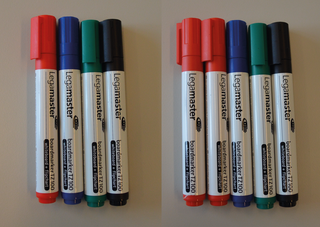
We are meaning-makers. We like things to make sense. We believe in religions that provide an account for why the world is the way it is. We pursue goals that fit our conceptions of ourselves in the world. We even prefer things that “make sense” to things that don’t: for example, a marker set with a single pen of each color, as opposed to a set with an extra red pen (i.e., the set on the left as opposed to the set on the right— even though the one on the right has more pens total).
Source: Sarah Cotterill
But what happens when things don’t make sense? When one’s sense of meaning in life is jeopardized after, for example, a traumatic or unexpected event? After a mass shooting, or the death of a loved one, or a life-threatening diagnosis?
When meaning is already there—when the world already seems to make sense—there is no need to use our cognitive resources to search for it. But when meaning doesn’t come to us effortlessly, we use effort to find it. Traumatic events trigger a more deliberate search for meaning precisely because they often don’t fit with one’s existing views of the world or one’s sense of self in the world. And psychologists have known for many decades now that people find the experience of dissonance—when things don’t fit together in our minds—distressing. For example, we don’t like it when our attitudes aren't aligned with our behaviors (e.g., “french fries are bad for me, but I still eat them”)—to the point that we typically either change our attitudes (e.g., “I read somewhere that the potato has gotten a bad rap”), or our behaviors (e.g., quit eating french fries altogether).
The same is true for events that shake our worldviews—it can be frightening and uncomfortable to think that the world maybe isn’t as we envisioned it. And the literature points to a few strategies we use (consciously or unconsciously) to resolve those discrepancies—to make that discomfort go away.
Here are five examples:
1. First, we often reconstrue the meaning of the event so as to fit into our existing worldviews—what is called assimilation. For example, in the aftermath of his cancer diagnosis, Jimmy Carter, a devoutly religious man, has publicly relied on his faith to help him make sense of his illness—what he calls his “latest adventure in life.” And a fellow member of his church congregation said this about his cancer: “When you get into a tough situation and you don’t know what God’s plan is, you should bow the knee.”
The critical part here is that cancer did not cause Carter nor his friends to revise their faith- in fact, it seems to have deepened it. They are hoping to understand how cancer fits into the plan for his life.
2. We also often change our worldviews to take into account the event—what is called accommodation.
We might conclude, for example, that while there is much good around us, the world is not as predictable as we might like to believe. That does not mean we have to adopt a pessimistic mindset. Rather, simply acknowledging that there is good and bad in the world might mean that when the bad does crop up it doesn't generate quite the same dissonance. (Incidentally, we also know that aspects of the brain respond more strongly to surprise than to the actual amount of “badness” wrapped up in any given event: the bad event you, to some extent, expect does not feel as unpleasant as the same event that you don’t see coming).
3. We engage in what’s called social comparison—reminding ourselves that, in certain respects, we might still be better off than many people in the world. Jimmy Carter also said, following his diagnosis, “I’ve lived a very good life.” In doing so, he seems to imply that there are others who have been less fortunate to this point—both a "prosocial" sentiment, and one that perhaps allowed him to feel more at peace with his own diagnosis. 4. We even engage in comparisons with ourselves. We might emphasize the fact that we’ve dodged outcomes even worse than the one’s we’ve been dealt—for example, cancers that could have been caught at later stages, or accidents that could have been more serious.
5. We often "reappraise" the event: we might search for silver linings—to see if we can find any good that has come out of a bad thing. For example, it is common to hear people (including myself) say that a certain traumatic event allowed them to become closer with their friends and family.
Through these processes, we often restore—and sometimes even enhance—our sense of meaning in life.
Oliver Sacks, on learning of his own cancer diagnosis, wrote in the New York Times, “Over the last few days, I have been able to see my life as from a great altitude, as a sort of landscape, and with a deepening sense of the connection of all its parts. This does not mean I am finished with life. On the contrary, I feel intensely alive, and I want and hope in the time that remains to deepen my friendships, to say farewell to those I love, to write more, to travel if I have the strength, to achieve new levels of understanding and insight.” The idea that enhanced well-being can come from trauma is taken up in the literature on what’s called post-traumatic growth—and will be the topic of a later post! Source: https://www.psychologytoday.com/us/blog/the-science-adversity/201606/5-ways-find-meaning-in-life-following-adversity -- Heintzelman, S.J., King, L.A. Meaning in life and intuition. Journal of Personality and Social Psychology, 110(3), 477-92.
Chater, N., & Loewenstein, G. (2016). The under-appreciated drive for sense-making. Journal of Economic Behavior & Organization, 126, 137-154. Karlsson, N., Loewenstein, G., McCafferty, J., 2004. The economics of meaning. Nordic Journal of Political Economy, 30(1), 61–75. Festinger, L. (1962). A theory of cognitive dissonance (Vol. 2). Stanford University Press.
"The reason we struggle with insecurity is because we compare our our behind-the-scenes with everyone else's highlight-reel"
- Steve Furtick (not Quantick, as I mention in the video - sorry Steve!)
This video discusses how comparisons with others are generally unhelpful in influencing how we feel since we're not comparing like-for-like and instead only seeing things from one perspective. Learn how comparison can be avoided or used productively as we navigate divorce and life generally.